A Topic Everyone Assumed Was Dead
The Zibo barbecue story might be the most surreal viral moment in Chinese internet history. In spring 2023, the barbecue from a third-tier city in Shandong province — a place most Chinese people could not locate on a map — suddenly became a national obsession. College students took high-speed trains specifically to eat there. The local government built parking lots overnight and launched barbecue shuttle buses. The Communist Party secretary himself poured beer for tourists at a barbecue stall.
And then? 2024, people said Zibo barbecue was over. Traffic numbers dropped. Some shops closed. By 2025, nobody discussed it anymore. By 2026, it had become a 'remember when that was a thing' footnote.
But I have always felt that a city's fate is not defined by viral traffic alone. So on June 4th, I took a 40-minute high-speed train from Jinan to Zibo. I wanted to see with my own eyes what actually happened to this place.
First Impressions at the Station
Stepping out of Zibo Station, my first thought was: this is busier than I expected. Not the insane crowds of 2023 — more like a healthy, normal level of activity. My taxi driver, a man in his fifties named Zhang, gave me the local perspective.
'Compared to before the hype, we are doing way better now. Before 2023, nobody came to Zibo on purpose. Now we get tourists from other cities every weekend. Not as crazy as that one year, obviously, but the taxi business is genuinely better than before.'
This is the key point. He was not comparing to 2023 — he was comparing to before 2023. The barbecue hype may have peaked and fallen, but it permanently transformed Zibo from a 'nobody visits' city into a 'people come here on purpose' city. That change stuck.
Muyang Village Is Still There, Just Different
I went to Muyang Village — the most famous barbecue joint from the 2023 craze. Arrived at 5:30pm. No line outside, but the place was about 70 to 80 percent full. The owner noticed I was from out of town (probably because I was taking photos of everything) and came over to chat.
'How is business these days?' I asked.
'Nothing like 2023, obviously. That year was insane. But it is way better than before the pandemic. We do a steady hundred-plus tables a day, two hundred on weekends. Before all this, our busy season was thirty or forty tables a day.' He paused and gestured at the room. 'And the customers are different now. In 2023, everyone was a college student checking off a bucket-list item. Eat, take a photo, leave. Now? The people who come here genuinely like barbecue. They take their time. They bring friends back with them.'
This is what I mean. When the viral wave recedes, what is left is real demand — people who actually value the product, not the hype. That is far more sustainable.
Is the Barbecue Still Good?
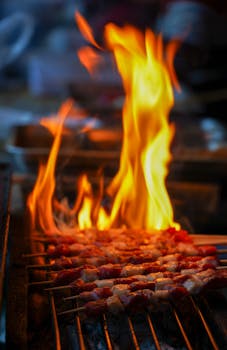
I ordered the classic trio: pork belly, sesame flatbread, and spring onions. The pork belly was grilled until the fat rendered crispy — you bite through a crackling exterior into tender meat, and the fat has been cooked down so much it is not greasy at all. Roll it in the flatbread with fresh spring onion and dip into the house sauce. One bite and — honestly — it is still really, really good.
At the next table, a couple from Qingdao noticed me struggling to assemble my wrap properly and showed me how to do it. They told me this was their second Zibo trip. 'Last spring we came once. This year we came again. Zibo barbecue is different from Qingdao seafood. It is so grounded, so down-to-earth. Sitting on those little stools around the grill, cooking your own skewers, drinking beer — it has this warmth that fancy restaurants do not have.'
She nailed it. Zibo barbecue is not just about whether the food is good. It sells an experience — DIY grilling at your table, those tiny square tables, squatting on little stools, beer and skewers and friends. That is a feeling you cannot get at a polished, upscale dining establishment. And in an era of increasingly refined urban dining, that rawness is valuable.
What Changed Beyond the Barbecue
Zibo surprised me in other ways too. The Badaju market now has uniform signage — less of the gritty, chaotic feel it had before, but much easier for tourists to navigate. The shops selling Liuli glassware and ceramics have multiplied compared to three years ago. Zibo has been a glass-making town for centuries; the barbecue tourism gave that industry a huge boost. Tourists eat barbecue, then buy a Liuli piece as a souvenir.
There are also new coffee shops and bookstores. That genuinely shocked me. A barbecue city developing a coffee culture? One cafe owner explained: 'Before, Zibo did not really have a cafe scene. Nobody here drank coffee. But when young tourists started coming, they wanted somewhere to sit and rest between meals. So we opened.'
That is the secondary effect of tourism that nobody talks about — it creates demand not just for restaurants, but for a more diverse and interesting urban life.
So Did Zibo Barbecue Die?
If 'died' means going back to pre-2023 levels — absolutely not. If 'died' means it is not as crazy as 2023 — yes, that is true. But I do not see that as a bad thing.
The 2023 Zibo barbecue was a viral phenomenon. All viral phenomena fade. But when the wave receded, Zibo was left with three things: national name recognition, better infrastructure (those parking lots and shuttle buses did not disappear), and a base of repeat customers who genuinely enjoy the experience.
At 9pm, when I left, there were still about a dozen people waiting outside Muyang Village. Not a huge crowd. But everyone was smiling. I think that is probably the best possible state for Zibo barbecue — no longer a phenomenon, but a real, sustainable destination.
My conclusion: Zibo barbecue did not die. It just grew up.