✈️ Travel

Why Santorini in Off-Season Is Actually Better (2026 Guide)

Why Santorini in Off-Season Is Actually Better (2026 Guide)

I've been wanting to visit Santorini for years. But every time I looked up photos, I saw the same thing: crowds of people squeezing through narrow streets, fighting for a spot at sunset, paying €15 for a bottle of water. It looked beautiful, sure, but also kind of miserable. So I decided to go against the grain and visit in March, deep in the off-season. And honestly? It was the best travel decision I've made in years.

Let me be clear: Santorini in March is not Santorini in July. Some restaurants are closed, the weather is hit or miss, and you won't see the famous sunset from Oia with a hundred strangers. But what you get instead is a version of the island that feels real. You get space to breathe, prices that don't make you wince, and a sense that you're experiencing something genuine rather than just checking a box on a bucket list.

The Weather: Not as Bad as You Think

Everyone told me I was crazy to go in March. They said it would be cold, rainy, and windy. And sure, some days were like that. But I also had days with clear blue skies and temperatures in the high 60s. I was able to eat lunch outside in a t-shirt on two separate occasions. The key is to pack layers — a light jacket, a sweater, and a scarf. You'll take them on and off throughout the day, but you won't be miserable.

And here's the thing: when it does rain, you get the island to yourself. I walked through the streets of Fira in a light drizzle, and I was literally the only person there. The wet cobblestones and the mist over the caldera created a moody, atmospheric vibe that I loved. It didn't feel like a vacation — it felt like an adventure.

The Crowds (or Lack Thereof)

I can't stress this enough: there are almost no tourists in March. The cruise ships don't start arriving until April. The big tour groups haven't shown up yet. I walked from Fira to Oia along the caldera path — a 10-kilometer hike that's supposedly one of the most beautiful in the world — and I saw maybe 15 people the entire time. In the summer, you'd be dodging selfie sticks every step of the way.

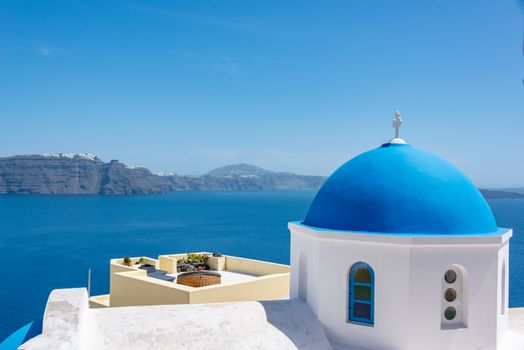
The lack of crowds also means you can actually enjoy the famous spots. I went to the blue-domed church in Oia that everyone photographs, and I had it to myself for a full 20 minutes. I sat on a bench overlooking the caldera and just watched the boats go by. No one was rushing me. No one was photobombing my pictures. It was peaceful in a way that I don't think summer Santorini can ever offer.

The Prices: Actually Affordable

I booked a room in a cave hotel in Fira for €80 a night. In July, that same room costs €350. I ate at a taverna overlooking the caldera and paid €12 for a full meal of grilled fish, lemon potatoes, and a glass of local wine. In the summer, you'd pay double that. Everything — flights, accommodation, food, wine tours — is significantly cheaper in the off-season.

And it's not just about saving money. It's about feeling like you're not being ripped off. I hate the feeling of paying a premium just because it's "high season." In March, I felt like I was getting a fair deal. The locals were friendlier too, probably because they weren't exhausted from dealing with hordes of tourists.

What's Closed and What's Open

I won't lie: some things are closed. A lot of the boutique shops in Oia are shuttered for the winter. Some of the fancier restaurants don't reopen until Easter. The sunset viewing platforms in Oia are empty, which is great for photos, but you won't find a cocktail bar to watch from. If your dream Santorini trip involves fancy nightlife and high-end dining, March is not the time.

But most of the essential stuff is open. The main towns of Fira and Oia have plenty of restaurants and cafes operating year-round. The archaeological sites, like Ancient Thera and Akrotiri, are open with reduced hours. The wineries are open for tastings, and you'll often get a private tour because no one else is there. I had a one-on-one tasting at a family-owned winery, and the owner sat with me for an hour, telling me about the island's volcanic soil and his grandfather's wine-making techniques. That's a memory I wouldn't trade for any sunset selfie.

Should You Go in Off-Season?

If your goal is to party, shop, and see Santorini at its most vibrant, go in June or September. But if you want to actually experience the island — to walk its empty streets, talk to its locals, and feel its quiet beauty — then the off-season is the way to go. I came home feeling like I'd discovered a secret that most tourists miss. And isn't that the whole point of travel?

I'm already planning my next off-season trip. Maybe I'll try Crete in November. Or Naxos in February. The quiet season has ruined me for peak travel. And I honestly couldn't be happier about it.

TR
Daniel Wilson

We spend hours researching and testing before we write anything. If something changes, we update the article. About our process →