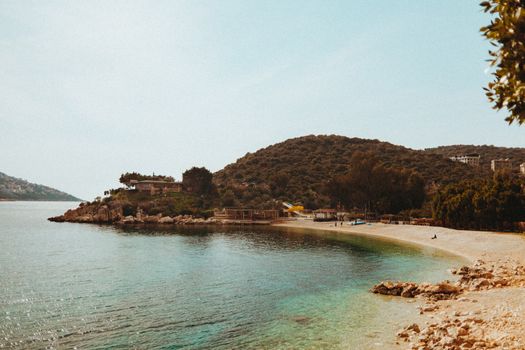
I’ll be honest: I went to Albania on a whim. My friend Sarah texted me in March, saying, “Flights to Tirana are $300. Let’s go.” I didn’t know anything about Albania except that it had beaches and that my dad once muttered something about “the Albanian mafia” while watching a crime documentary. I packed my bag, a bit nervous. But after two weeks—June 1 to June 14, 2026—I’m already planning my return. Here’s why this country is the next big thing in travel.
The Beaches Are Unreal
I’ve been to Greece, I’ve been to Croatia, I’ve even been to the Maldives (once, on a credit card points trip). The beaches in Albania are just as beautiful. The water in Ksamil is that same electric turquoise you see in Santorini photos, but there are no cruise ships dumping thousands of tourists. I walked to a beach called Bora Bora (yes, that’s its real name) and had a stretch of sand almost to myself on a Tuesday in June. The water was warm—like bathwater—and the only sound was a guy selling fresh figs from a cooler. It felt like a secret.
The Price Will Shock You
Here’s the thing that made me angry at my travel agent: Albania is cheap. Really cheap. A meal at a nice restaurant—fresh seafood, local wine, dessert—cost me about $15. A beer on the beach? $2. A private room in a guesthouse near the Riviera? $40 a night. I stayed in a family-run hotel in Dhërmi, and the owner, a 70-year-old woman named Lule, brought me homemade raki every evening while telling me stories about the communist era. I tried to tip her $20, and she refused, saying, “You are my guest, not my customer.” Try that in Mykonos for $40.
The History Is Raw
One day, I took a bus to Berat, a UNESCO World Heritage city known as the “city of a thousand windows.” The Ottoman-era houses cling to the hillside like something from a fairy tale. But the most memorable part was the bunkers. Albania is covered in over 700,000 former communist bunkers—small concrete domes built during Enver Hoxha’s paranoid rule. They’re everywhere: in fields, on beaches, even in people’s backyards. Some have been turned into museums, others into cafes. I sat in one that was now a wine bar. It was surreal, sipping a local red wine inside a symbol of decades of isolation.