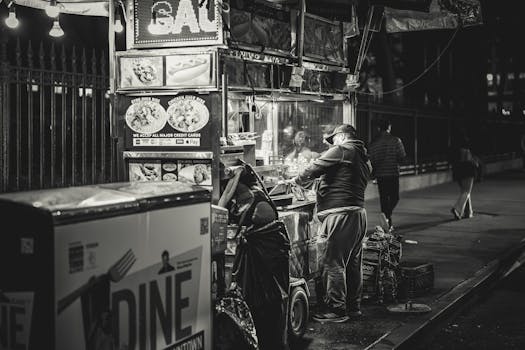
I first heard about Roller Rabbit from a friend who lives in the East Village. She sent me a photo of a line stretching from the corner of 5th Street and 2nd Avenue at 9 AM on a Tuesday. The caption: 'This is insane. People are waiting for CHAI.' I figured it was just another Instagram hype machine — you know, the kind where a place gets famous for being famous. But then I saw three more friends post about it within a week. Then a New York Times food critic mentioned it in a newsletter. By the time Bon Appétit ran a feature, I knew I had to check it out myself.
I showed up on a Wednesday morning at 8:30, thinking I'd beat the crowd. The line was already 40 people deep. At 9 AM sharp, a guy with a handlebar mustache unlocked the door, and the smell hit me like a warm hug. Cumin, coriander, turmeric, something smoky I couldn't identify. I waited exactly 57 minutes. Was it worth it? Let me tell you.
The Origin Story (It's Not What You Think)
Roller Rabbit started as a pop-up in 2024, run by a chef named Priya Sharma who previously worked at a two-Michelin-star restaurant in Mumbai. She's not trying to reinvent Indian food — she's trying to make the food she grew up eating, but with the precision of fine dining. The menu changes weekly based on what's at the Union Square Greenmarket. She sources her spices from a tiny shop in Jackson Heights that's been around for 30 years.
What's the signature dish? There isn't one, officially. But everyone orders the 'Morning Vada Pav' — a spiced potato fritter served on a soft bun with chutneys that change daily. The version I had came with a tamarind-date chutney that was sweet, tangy, and slightly spicy. It's $6. For that price in Manhattan, you expect a sad sandwich. This was transcendent.
The Chai That Started a Movement
The chai at Roller Rabbit is what people line up for. And I get it now. Priya told me she makes it the way her grandmother did — boiling loose-leaf Assam tea with fresh ginger, cardamom pods, cinnamon stick, and whole cloves. Then she adds milk and lets it simmer for 20 minutes. Most coffee shops 'brew' chai from a concentrate. This is the real thing.
But here's the detail that matters: she serves it in small, unglazed clay cups called kulhads. They're biodegradable, sourced from a potter in Rajasthan. The clay gives the chai a slightly earthy taste that you can't replicate in ceramic. It's $4. I had three.
The Rice Bowl That Changed My Mind About Breakfast
I'm not usually a savory breakfast person. I'm a 'coffee and regret' type. But the Roller Rabbit breakfast rice bowl converted me. It's a bowl of short-grain rice topped with a soft-cooked egg, pickled vegetables, crispy fried shallots, and a spoonful of spicy coconut sambol. It sounds simple. It's not. The egg is cooked sous vide at 63 degrees Celsius so the yolk is perfectly jammy. The pickles are made in-house and change weekly. The sambol has a heat that builds slowly, not aggressively.
I watched Priya make one while I waited. She treated each bowl with a focus I usually only see in Michelin kitchens. She tasted the rice before serving it. She adjusted the salt on the egg. She wiped the rim of the bowl with a cloth. It's that level of care that makes the wait worth it.
The Instagram Effect (Is It Real?)
I have to address the elephant in the room: Roller Rabbit is undeniably Instagram-friendly. The space is tiny — maybe 15 seats — with exposed brick walls, mismatched vintage chairs, and a chalkboard menu. The food is photogenic. The clay cups are photogenic. The line is photogenic, in a 'look at this authentic New York experience' way.