The Hype Is Real. But So Is the Catch.
If you follow any travel influencers on Instagram, you've seen Medellín. The photos of the cable cars rising over the city. The "digital nomad lifestyle" shots of laptops in cafes with a view of the Aburrá Valley. The claims that you can live like a king for $1,500 a month. It's become the poster child for remote work migration, right alongside Lisbon and Chiang Mai.
In 2026, the trend has exploded. According to Colombia's migration authority, over 150,000 digital nomads visited Medellín in 2025, up from 80,000 in 2023. The city has responded with new co-working spaces, coliving buildings, and a booming service economy catering to foreigners. I spent two months there from April to June 2026 to see if the dream matches reality. Spoiler: it's complicated.
The Good: The City Is Actually Beautiful
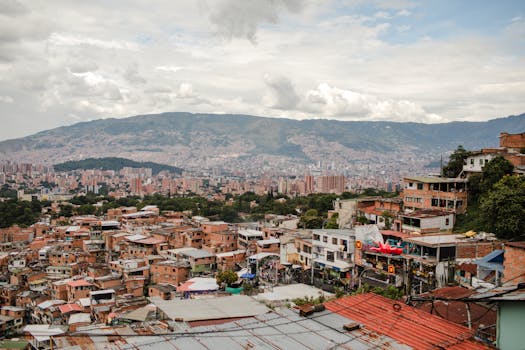
Let me start with the positives, because there are many. Medellín sits at 1,500 meters elevation, which means the weather is perfect year-round. It's not hot, not cold — just a consistent 22-26°C (72-78°F) every single day. No seasons. Just eternal spring. I woke up every morning to birds singing and a view of the mountains. The pollution is noticeable — Medellín has a car problem — but it's not as bad as Mexico City or Santiago.
The cost of living is genuinely lower than North America or Europe. I rented a furnished one-bedroom apartment in the El Poblado neighborhood (the most expensive area) for $600 a month. Eating out cost $5-10 for a lunch menu, $15-20 for a nice dinner with drinks. Ubers across the city were $3-5. I spent about $1,200 a month total, living comfortably. That's less than I spend on rent alone in San Francisco.
The people are friendly. Colombians, in my experience, are warm and welcoming. I made friends quickly — at a salsa class, at a coworking space, at a rooftop bar. The English level is lower than in other digital nomad hubs, which forced me to practice Spanish. That was a positive. I improved my Spanish more in two months than I did in a year of Duolingo.
The Co-Working Scene Is Legit
Medellín has dozens of coworking spaces. The best one I visited is called Selina, which has locations in El Poblado and Laureles. It's $150 a month for a hot desk. The internet is fast (200 Mbps symmetrical), the coffee is good, and the community is social. Every Thursday, they have a networking event with free beer. I met startup founders, freelance designers, YouTubers, and a guy who was building a SaaS product for Colombian farmers. The energy is infectious.
Another great option is Atom House, a coliving/coworking hybrid in Manila (a neighborhood near El Poblado). It's $800 a month for a private room with a desk, all utilities, cleaning, and access to a shared kitchen and coworking area. I stayed there for two weeks and loved the community dinners. The average age was 28, mostly Americans and Europeans, but also Brazilians and Argentines.
The Dark Side: Gentrification and Resentment
Now for the part that the Instagram posts don't show. Medellín is experiencing a housing crisis fueled by digital nomads and foreign investors. Rents in El Poblado have tripled since 2020. Locals who grew up in the neighborhood can no longer afford to live there. They've been pushed to the outskirts, where commutes are longer and services are worse.