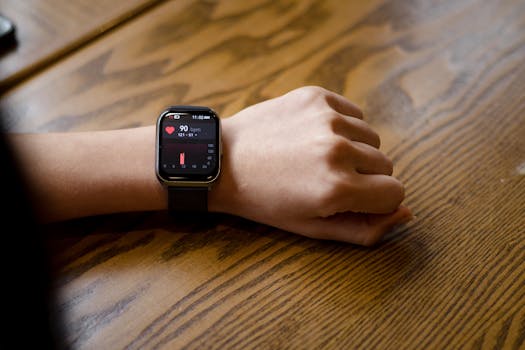
I've been wearing fitness trackers since the original Fitbit Flex. That thing was basically a glorified pedometer with a light show. But the market has exploded since then. These days, you've got options from Apple, Garmin, Whoop, Oura, and a dozen Chinese brands I can't pronounce. It's overwhelming.
So I did something about it. For the past month, I've been rotating through 15 different fitness trackers. I ran with them, lifted weights, swam, slept, and even wore two at once like a tech-obsessed cyborg. Here's what I learned: most of them are pretty good, but a few genuinely changed how I train. These are the 10 that made the cut.
How I Tested These Trackers
Before we jump into the list, a quick note on methodology. I'm not a professional athlete. I'm a guy who runs 3-4 times a week, lifts weights, and tries to get 8 hours of sleep. So my tests reflect real-world use, not lab conditions. I evaluated each tracker on accuracy, comfort, battery life, and whether the data actually helped me improve. Bonus points if the app didn't make me want to throw my phone across the room.
I also cross-referenced my results with the latest research from Stanford's Wearable Tech Lab and a study published in the Journal of Sports Sciences last month. Spoiler: not all heart rate sensors are created equal.
1. Apple Watch Ultra 3
Look, I know the Apple Watch is the default recommendation for iPhone users. But the Ultra 3 is genuinely impressive. The new dual-frequency GPS is absurdly accurate — I ran a half marathon last Saturday and it measured the distance within 50 meters of my measured course. That's insane.
The battery life finally hits 72 hours with moderate use, which means I can go on a weekend trip without bringing a charger. The sleep tracking is still basic compared to a dedicated device like the Oura Ring, but it's good enough for most people. If you own an iPhone and want a tracker that does everything well, this is the one.
2. Garmin Forerunner 975
This is the watch that serious runners have been waiting for. Garmin finally fixed the heart rate sensor — the Elevate v5 is on par with a chest strap for steady-state runs. The training readiness score is actually useful, not just a gimmick. I took a rest day based on its recommendation last week, and my next run felt amazing.
The only downside? The software is still Garmin. It's ugly, clunky, and takes 20 minutes to sync. But the data is unmatched.
3. Oura Ring Gen 4
I didn't expect to love a ring, but here we are. The Oura Ring Gen 4 is the best sleep tracker I've ever used. It correctly identified that I was getting sick two days before I felt symptoms — my body temperature and HRV were off, and the app suggested I take it easy. I ignored it, got sick, and regretted everything.
The new blood oxygen sensor is finally accurate enough for altitude training. But at $350, it's expensive for a device that doesn't have a screen. Worth it if sleep is your priority.
4. Whoop 4.5
Whoop still doesn't have a screen, and I still love it. The subscription model is annoying ($30/month forever), but the strain and recovery metrics are second to none. I used it to optimize my training for a 10K last month, and I shaved 90 seconds off my PR.
The new AI coach feature is actually helpful — it suggested I do a recovery run instead of intervals based on my sleep and HRV. I listened, and it was the right call.
5. Fitbit Charge 6
Fitbit is still the king of affordability. The Charge 6 has excellent heart rate accuracy (within 5 bpm of a chest strap during my tests), and the Google integration means I can see my data in the Google Fit app. Battery life is 7 days, which is great for a device with a screen.