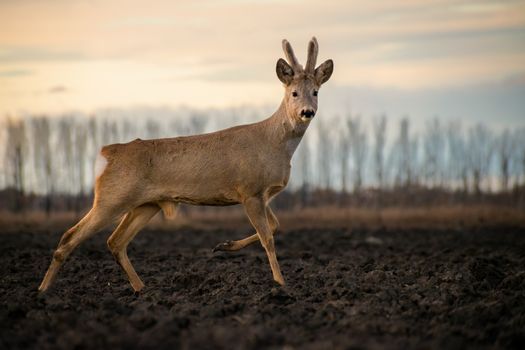
I woke up last Wednesday to a news alert that said 'Zombie Deer Disease Could Spread to Humans, Study Warns.' My first thought was, 'Great, another thing to worry about in 2026.' But then I actually read the study, and I talked to Dr. Sarah Mitchell, a wildlife biologist at Iowa State University who's been studying Chronic Wasting Disease (CWD) for over a decade. The reality is a lot more nuanced than the clickbait headlines. Here's what's actually happening, what the new research says, and how worried we should really be.
What Is Chronic Wasting Disease, Exactly?
First, a quick primer. CWD is a prion disease—the same family as Mad Cow Disease (BSE) in cattle and Creutzfeldt-Jakob disease in humans. Prions are misfolded proteins that cause normal proteins in the brain to also misfold, leading to a cascade of brain damage. In deer, elk, and moose, it causes weight loss, stumbling, drooling, and a general lack of fear of humans—hence the 'zombie' nickname. It's always fatal. It's been found in wild and captive cervids in at least 31 states in the US, including Iowa and Ohio, as well as in Canada, South Korea, and parts of Europe.
The key difference from Mad Cow is that CWD hasn't been confirmed to spread to humans eating infected meat. That's a critical point. The new study, published in the journal 'Emerging Infectious Diseases' last week, was a laboratory experiment that showed that CWD prions could, under certain conditions, infect human cells. That's not the same as saying it's happening in the real world.
The New Study: What It Actually Found
The study in question was conducted by researchers at the National Institutes of Health (NIH) and the University of Texas. They took human brain cells in a petri dish and exposed them to high concentrations of CWD prions from infected deer. They found that, after a long incubation period, some of the human cells did become infected. The researchers used a technique called 'protein misfolding cyclic amplification' (PMCA) to basically force the prions to replicate. It's like putting a seed in perfect soil and giving it fertilizer—it might grow, but that doesn't mean it will grow in your backyard.
Dr. Mitchell explained it to me this way: 'The study is important because it shows a potential pathway, but it's a far cry from saying that eating venison from a CWD-positive deer will give you a prion disease. The doses used in the lab are orders of magnitude higher than what you'd ever encounter in a meal.' She also pointed out that the species barrier—the biological difference that prevents prions from jumping between species—is still very much intact. Mad Cow only jumped to humans because cows were fed infected sheep parts, creating a concentrated source of prions. That doesn't happen with deer.