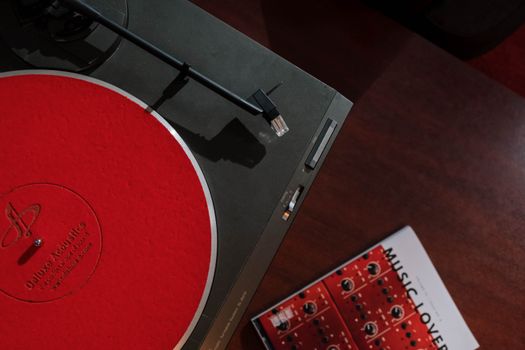
I'll admit it: I was a skeptic. For years, I rolled my eyes at vinyl enthusiasts. 'It's just nostalgia,' I'd say. 'Digital sounds better. It's more convenient. You're paying for the aesthetic.' Then I went to a friend's house last month and heard my favorite album—Radiohead's 'OK Computer'—on a proper turntable. And I got it. I finally got it. Two weeks later, I bought my first turntable, and I haven't looked back.
The Reality of Vinyl: It's Not About Sound Quality
Let me be clear: vinyl doesn't sound 'better' than digital in an objective sense. It has a lower dynamic range, more surface noise, and can warp or degrade over time. But what it does have is presence. When you put a record on, you're committing to the album. You can't skip songs with a tap. You have to listen. The ritual—taking the record out of the sleeve, cleaning it, lowering the needle—forces you to be intentional. In a world of infinite playlists and algorithmic suggestions, that intentionality is precious.
The 2026 Vinyl Boom: What's Driving It?
According to the Recording Industry Association of America (RIAA), vinyl sales in 2025 hit $2.4 billion, the highest since 1986. And the trend is accelerating in 2026. What's driving it? A few things. First, younger listeners are discovering vinyl as a tangible format. Gen Z, in particular, values physical media as a counter to the ephemeral nature of streaming. Second, artists are leaning into it. Taylor Swift's 'The Tortured Poets Department' sold over 800,000 copies on vinyl in its first week. Billie Eilish, Kendrick Lamar, and even newer acts like beabadoobee are releasing deluxe vinyl editions with exclusive tracks and artwork. Third, the pandemic created a desire for home-based rituals. People wanted something to do at home that wasn't staring at a screen. Vinyl fits that need.
My Setup: What I Bought and Why
I didn't want to spend a fortune, but I also didn't want a cheap turntable that would damage my records. After reading reviews and talking to audiophile friends, I settled on the Audio-Technica AT-LP120XUSB. It's a direct-drive turntable with a built-in preamp, so you don't need a separate receiver. It cost me $249. I paired it with Edifier R1280T powered speakers ($99), which are surprisingly good for the price. For storage, I bought a simple wooden crate from IKEA. Total cost: around $400. That's less than a year of Spotify Premium for two people. And I own my music forever.