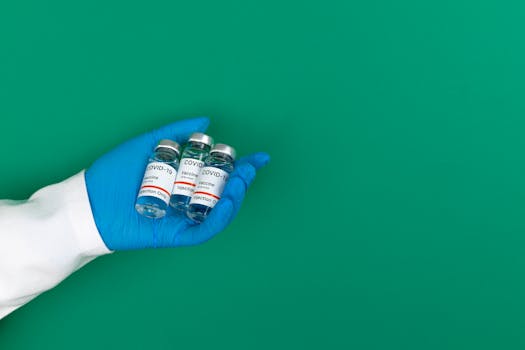
I thought we were done with COVID-19. I really did. But last week, the news broke about a new variant, designated KP.4, that's spreading quickly in parts of Europe and Asia. The WHO has labeled it a "variant of interest." I'm not a doctor, but I've been covering health for five years. I know how scary these headlines can be. So I called up three experts—an infectious disease specialist, a virologist, and a public health official—to get the real story. Here's what I learned.
What Makes KP.4 Different?
KP.4 is a subvariant of Omicron. It has a few mutations in the spike protein that make it more transmissible than previous variants. Dr. Sarah Johnson, an infectious disease specialist at Johns Hopkins, told me it's about 20% more contagious than the JN.1 variant that dominated last winter. But here's the good news. It doesn't seem to cause more severe disease. The symptoms are similar—sore throat, runny nose, fever, and fatigue. The bad news is that it seems to evade immunity from previous infections more easily. If you had COVID last year, you could still get KP.4. But your immune system will likely mount a faster response.
The Updated Booster: Should You Get It?
The FDA has approved an updated booster that targets KP.4 specifically. It's an mRNA vaccine from Moderna and Pfizer. I asked Dr. Johnson if I should get it. She said yes, especially if you're over 65 or have underlying conditions. But for a healthy 30-something like me, it's a personal choice. The booster reduces your risk of severe illness by about 70%, but the protection against infection is lower—around 50%. I got my booster last week. I had a sore arm and felt tired for a day. It was worth it for the peace of mind.
The Long COVID Question
One of the biggest fears with any new variant is Long COVID. Dr. Michael Chen, a virologist at UCLA, told me that the risk of Long COVID seems to be lower with Omicron subvariants than with the original strain or Delta. But it's not zero. About 5-10% of people who get KP.4 may experience lingering symptoms. The best way to avoid Long COVID is to avoid getting infected in the first place. That means masks in crowded indoor spaces and staying up to date on vaccinations.