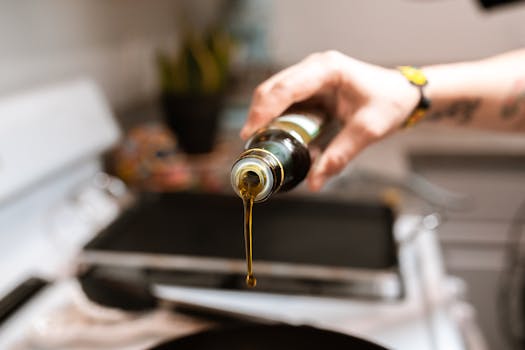
I have a confession: I used to buy the most expensive extra virgin olive oil I could find and use it for everything—frying eggs, roasting vegetables, even baking. I thought I was being sophisticated. Turns out, I was wasting money and arguably making my food worse.
This realization came after I read a study published in the Journal of Agricultural and Food Chemistry last month that analyzed how different olive oils behave when heated. The results made me completely rethink my kitchen habits. So I did what any reasonable person would do—I spent a month and about $200 testing different oils to see if the science held up in real cooking.
The Science Nobody Talks About
Here's the thing that olive oil companies don't want you to know: extra virgin olive oil has a relatively low smoke point compared to other cooking oils. That smoke point is around 375-410°F depending on the quality. Regular vegetable oil? 450°F. Avocado oil? 520°F. When you heat extra virgin olive oil past its smoke point, it breaks down and releases compounds that taste bitter and can even be harmful.
But more importantly, those delicate flavors you paid extra for—the grassy notes, the peppery finish, the fruity aroma—they're gone within minutes of hitting a hot pan. You're literally paying $25 for a flavor that disappears before your food is cooked.
Dr. Maria Santos, a food scientist at UC Davis who studies olive oil, told Food & Wine last week that 'the vast majority of flavor compounds in extra virgin olive oil are volatile and evaporate within 60 seconds at cooking temperatures.' That's not an opinion—that's chemistry.
The Taste Test: I Cooked the Same Dish 8 Ways
To prove this to myself, I made the same simple dish—pan-fried chicken thighs with rosemary and garlic—eight times over two weeks, each time with a different olive oil. I used everything from a $6 store-brand bottle to a $32 single-estate oil from Tuscany.
The result? When cooking at medium-high heat, I couldn't tell the difference. At all. My wife, who has a much more refined palate than me, also failed a blind taste test. The expensive oil tasted exactly like the cheap oil after being heated for 10 minutes.
But when I used the same oils as a finishing drizzle on the cooked chicken? Huge difference. The $32 oil had a complex, almost grassy flavor with a pleasant peppery kick at the end. The $6 oil tasted like nothing—just oily texture. That's where the money matters.
The Industry's Dirty Little Secret
Here's something that shocked me: a lot of the 'extra virgin' olive oil sold in American supermarkets isn't actually extra virgin. A 2024 investigation by the Chicago Tribune found that nearly 40% of olive oils labeled 'extra virgin' failed quality tests when analyzed in labs. Some were diluted with cheaper oils like sunflower or canola. Others were made from lower-quality olives and chemically treated to mask defects.
This isn't just about flavor—it's about health. Real extra virgin olive oil is rich in polyphenols and antioxidants. The fake stuff? Not so much. You're paying premium prices for what might be refined oil with a fancy label.