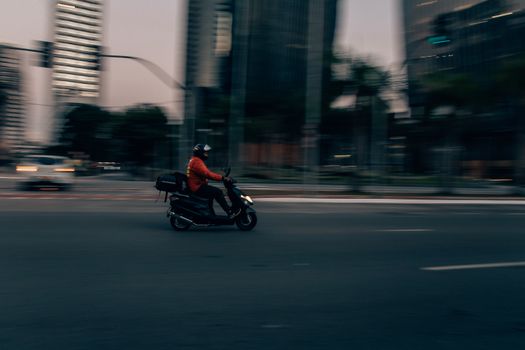
Last Tuesday, I ordered dinner through Uber Eats. I got a decent pad thai from a place called "Bangkok Street Bites." The food was fine — not great, but fine. The next day, I was walking through an industrial park near my apartment when I noticed a sign for a building I'd never seen before: "Cloud Kitchen Collective." I looked up the address. Turns out, Bangkok Street Bites operates out of that building. Along with six other virtual brands — a taco joint, a burger spot, an Indian place, and three others. There's no dining room. There's no sign out front. There's just a kitchen with a dozen delivery drivers standing around on their phones.
This is the reality of eating in 2026. Dark kitchens — also called ghost kitchens, cloud kitchens, or virtual restaurants — are everywhere. They've grown from a pandemic-era workaround into a massive industry. Research firm Euromonitor estimates that the global ghost kitchen market will reach $150 billion by 2028. In the US alone, there are over 10,000 virtual restaurant brands operating out of shared kitchen spaces. And the trend is only accelerating.
But as someone who loves food and cares about the people who make it, I wanted to dig deeper. How do these kitchens actually work? Who's cooking your food? And should we be worried?
The Promise: Lower Costs, More Options
The business case for ghost kitchens is simple: rent is cheaper in industrial areas than on Main Street. No need for a front-of-house team, decor, or a liquor license. You can launch a new brand in weeks instead of months. This means restaurants can experiment with concepts that wouldn't survive in a traditional setting. A chef might try a fusion concept that's too niche for a physical location. Or a successful chain can test a new menu without cannibalizing their flagship.
For consumers, the upside is obvious: more delivery options, lower prices (theoretically), and faster service. A pizza from a ghost kitchen might cost $2 less than one from a brick-and-mortar pizzeria, and it'll arrive hotter because the kitchen is closer to your house. Some ghost kitchens are hyper-local, operating within a few miles of dense neighborhoods. That's a genuinely good innovation.
The Dark Side: Labor, Safety, and Quality
But there are serious issues. I spoke with three former ghost kitchen workers for this article (they asked to remain anonymous for fear of retaliation). The stories were alarmingly similar: low wages, high pressure, and minimal oversight. "We were expected to produce 50 orders per hour," one worker told me. "The equipment was always breaking. The managers didn't care about quality — they just wanted the numbers." Another worker described a kitchen where food safety was an afterthought. "The cooler was broken for three days. They kept serving chicken. I quit."
Health inspections are another concern. Ghost kitchens often operate under different regulations than traditional restaurants. In some cities, they're classified as "food manufacturing facilities" rather than restaurants, which means fewer inspections. A 2025 investigation by The Guardian found that ghost kitchens in Los Angeles had a 40% higher rate of critical health violations than traditional restaurants. That's a statistical difference that should make you think twice before ordering that $6.99 pad thai.
Then there's the quality issue. A ghost kitchen might operate under five different brand names, but all the food comes from the same line. The "Mexican" tacos and the "Japanese" ramen might both use the same ground beef. The menu descriptions are often aspirational rather than accurate. A 2024 study by NYU's Stern School of Business found that customers rated ghost kitchen food 18% lower on average than food from traditional restaurants. The convenience comes at a cost, and that cost is taste.