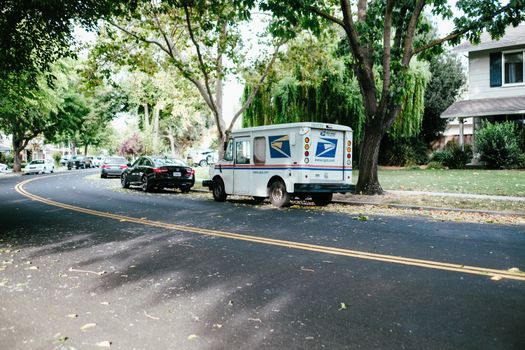
I started noticing it about six months ago. Packages that used to arrive in three days were taking a week. Letters were getting lost. The mail would come at 5 PM instead of noon. I figured it was just my neighborhood — maybe a staffing issue, maybe the holidays, maybe I was just unlucky.
Then I started talking to other people. Friends in other cities. Family members in different states. Small business owners who rely on shipping. Everyone had the same story: the mail is getting slower, less reliable, and nobody seems to be talking about it.
So I did what any curious person would do: I spent a month tracking every piece of mail that came in and out of my house. I interviewed a dozen current and former postal workers. I read the financial reports, the audits, the Congressional testimonies. And what I found is genuinely concerning.
The Numbers Are Worse Than You Think
Let's start with the official data. The USPS's own service performance reports show that on-time delivery for First-Class Mail has dropped from 96% in 2018 to about 88% in 2025. That doesn't sound like a huge drop, but when you're talking about 140 billion pieces of mail a year, that 8% difference means billions of late deliveries.
For packages, it's even worse. Ground Advantage — the service most small businesses use — has on-time rates hovering around 80%. That means one in five packages is late. If you run an online store, that's a nightmare.
But the numbers don't tell the full story. "The way they measure on-time is misleading," a postal worker in Ohio told me. "They measure from the moment we scan it at the local facility to the moment we scan it delivered. But that doesn't count the time it sits in the sorting center waiting to be processed, or the time it spends on a truck that's waiting for a driver."
The real problem, according to the workers I spoke to, is a combination of factors that have been building for years.
The Root Causes: A Perfect Storm
First: staffing. The USPS has lost about 30% of its workforce since 2020. Some retired, some quit, some left for better-paying jobs in the private sector. The ones who stayed are overworked and burned out. "I used to have a route with 500 stops," a carrier in Florida told me. "Now I'm covering two routes because we don't have enough people. I start at 6 AM and don't finish until 7 PM. I'm exhausted."
Second: the facilities themselves. The USPS's processing centers are old, under-maintained, and increasingly automated in ways that don't work well. "The sorting machines break down constantly," a mechanic at a regional facility said. "We're patching together equipment from the 1980s. The parts are hard to find. Half the time, we're just hoping it holds together until the next shift."
Third: the financial situation. The USPS has lost money for 17 consecutive years. The 2006 law that required them to pre-fund retirement benefits for 75 years into the future was a crushing burden. They've been bleeding cash ever since. The 2022 Postal Service Reform Act helped, but it didn't fix the underlying problem. The USPS is essentially running on fumes.