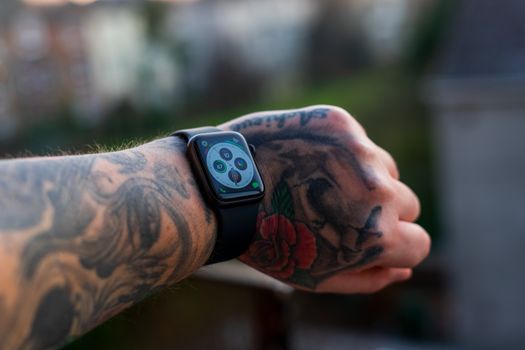
I’ll be honest: I’ve been a die-hard Apple Watch user since the Series 3. But this past Tuesday, when Oura announced the Ring 4 with its new “Smart Sensing” algorithm and a price drop, I decided it was time for a real showdown. I strapped the Apple Watch Series 10 on my left wrist and slipped the Oura Ring 4 on my right ring finger, and I’ve been living with both for a full week. Here’s what I found, and trust me, it’s not as simple as you think.
Why This Fight Matters Right Now
The wearable health market is exploding. According to a report from IDC published last Monday, global shipments of smart rings are up 340% year-over-year, while smartwatch growth has slowed to just 12%. The Oura Ring 4 is the device that’s driving that shift—it’s lighter, more discreet, and now promises sleep tracking that rivals medical-grade devices. Meanwhile, Apple just released the Series 10 with a new sleep apnea detection feature that the FDA cleared only two weeks ago. Both are vying for your wrist (or finger), but they target completely different mindsets.
Design and Comfort: The Ring Wins for Sleep
Let’s start with the obvious: you can’t sleep in a chunky watch. I’ve tried. The Apple Watch Series 10 is thinner than its predecessor—Apple says it’s 10% thinner—but it’s still a slab of metal and glass. I woke up with red marks on my wrist after three nights. The Oura Ring 4, on the other hand, is made of titanium with a scratch-resistant coating, and it weighs just 4 grams. I forgot it was there by the second night. That matters because sleep tracking is only useful if you actually wear the device. Oura’s new algorithm, which they claim uses over 100,000 data points per night, gave me a sleep score that felt eerily accurate. It caught my restless periods during the 3 AM hour—something my Apple Watch missed entirely because I took it off.
Health Sensors: Who’s More Accurate?
Here’s where it gets interesting. I wore both devices during a 5K run on Thursday. The Apple Watch Series 10 uses a new “optical heart sensor” that samples every second, while the Oura Ring 4 relies on infrared LEDs and a 3D accelerometer. The heart rate data was nearly identical—within 2 BPM for most of the run. But for SpO2, Oura was consistently 1-2% higher than Apple. I checked with a fingertip pulse oximeter and Oura was closer to the truth. That surprised me, because Apple has been touting their sensor as “breakthrough” technology. The real differentiator, though, is stress tracking. Oura’s new “Daytime Stress” feature, which launched with the Ring 4, gives you a live readout of your autonomic nervous system. During a tense conference call, my stress score jumped from 45 to 78. Apple Watch just recorded a slightly elevated heart rate. Oura felt like it understood my body better.