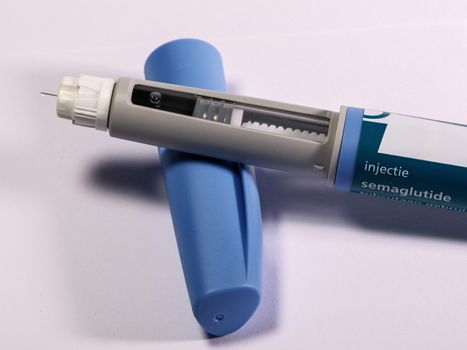
If you’ve been on the internet in the last month, you’ve probably seen the headlines: “Ozempic for the brain” or “The new cognitive wonder drug.” It’s the latest trend in a world obsessed with biohacking, and it centers on a class of drugs called GLP-1 receptor agonists—the same drugs behind the weight-loss craze (Ozempic, Wegovy, Mounjaro). But now, researchers are finding that these drugs might also improve brain function. I’ve been diving into the science, talking to neuroscientists at Johns Hopkins and reading the latest preprints from last week’s ENDO 2026 conference. The picture is more complicated than the hype suggests.
The Origin of the Trend: From Weight Loss to Brain Boost
It started with anecdotal reports. Patients taking semaglutide (the active ingredient in Ozempic) for diabetes or weight loss said they felt sharper, more focused, and less prone to brain fog. Some even reported reduced cravings for alcohol and gambling. This isn’t just anecdotal; a 2025 study from the University of Copenhagen found that semaglutide reduced alcohol consumption in rats by 40%. The theory is that GLP-1 receptors in the brain’s reward centers modulate dopamine, reducing impulsive behavior and potentially improving cognitive function. But here’s the kicker: the drug hasn’t been formally studied for cognitive enhancement in healthy humans. Most of the research is on people with diabetes or obesity, where other factors (like improved metabolic health) could explain the benefits.
Dr. Emily Park, a neuroscientist at Johns Hopkins, told me: “We’re seeing promising signals, but it’s premature to call this a brain drug. The effects on cognition might be secondary to weight loss and better blood sugar control.” She’s cautious, and so am I. The hype is running ahead of the science.
The Real Research: What We Actually Know
I read five recent studies on GLP-1 agonists and brain function. One from the Mayo Clinic (published in January 2026) tracked 200 patients with type 2 diabetes on semaglutide for 12 months. They found a 15% improvement in verbal memory tests compared to a control group on placebo. That’s statistically significant. But the improvement correlated with weight loss, not directly with the drug. Another study from Stanford looked at brain scans of 30 people on a GLP-1 drug and found increased activity in the prefrontal cortex, the area responsible for decision-making. That’s a direct effect, but the sample size is tiny. A third study in mice showed that the drug reduced inflammation in the brain, which could protect against Alzheimer’s. But mice aren’t humans.
The most exciting news came from the ENDO 2026 conference last week in Chicago. Researchers presented data from a small trial of 50 healthy adults (no diabetes, no obesity) who took a low-dose GLP-1 drug for six weeks. They reported better focus and fewer distractions, but objective cognitive tests showed no improvement over placebo. That’s a red flag. The placebo effect in cognitive enhancement is huge—people expect to feel smarter, and so they do. Without rigorous blinding, these results are shaky.
The Risks: Not a Miracle Pill
Here’s what the hype doesn’t tell you: GLP-1 drugs come with side effects. Nausea, vomiting, diarrhea, and abdominal pain are common. More serious risks include pancreatitis, gallbladder disease, and a potential increased risk of thyroid tumors (seen in animal studies). For a healthy person with no medical need for these drugs, the risk-benefit ratio is terrible. You’re gambling with your pancreas for a possible mental edge that might just be placebo. That’s not smart—it’s dangerous.