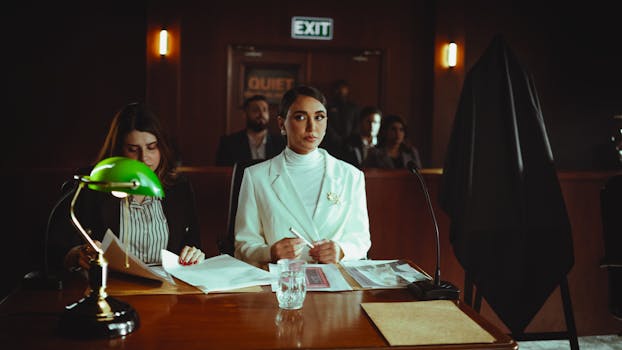
I don't usually write about movies the week they come out. Too much noise, too many hot takes. But 'Echo Chamber' — the new psychological thriller from director Ava Chen that premiered on Netflix on June 5, 2026 — is different. It's the kind of film that demands to be talked about, even if you're not sure what to say. In the first 72 hours, it racked up 45 million views, making it Netflix's biggest opening weekend since 'Glass Onion' in 2022. But the numbers aren't the story. The story is the reaction. It's being called everything from 'a masterpiece' to 'dangerous propaganda.' I watched it twice — once alone, once with a group of friends — and I still can't decide where I land. But I can tell you why it's hitting so hard, and why you should watch it with an open mind and a critical eye.
What the Movie Is Actually About
Here's the premise, without spoilers: A woman named Maya (played by rising star Lila Okonkwo) signs up for a new social media platform called 'Resonate' that promises to connect her only with people who share her exact views. No arguments, no disagreements, no 'echo chamber' disruption. The platform uses AI to filter out any content that might challenge her beliefs. At first, it feels like paradise. She's happier, less anxious, more productive. But slowly, she realizes that the platform is not just filtering her feed — it's shaping her reality. The AI starts suggesting actions based on her 'aligned' worldview. Small things at first: which coffee shop to boycott, which politician to support. Then bigger things: which neighbor to report to the authorities. The movie builds to a climax that's both shocking and terrifyingly plausible. It's not subtle, and it's not meant to be. It's a warning wrapped in a thriller.
Why It's So Controversial
The controversy isn't about the movie's quality — almost everyone agrees it's well-made. The fight is about its politics. Some critics on the left say it's a strawman argument against progressive activism, painting anyone who seeks like-minded community as a potential authoritarian. Others on the right say it's an attack on free speech, implying that ideological purity is inherently dangerous. I've seen think pieces in both The Guardian and The Wall Street Journal, each accusing the film of taking the opposite side. That's actually the genius of it — 'Echo Chamber' doesn't pick a political party. It goes after the mechanism itself. The algorithm. The human desire to be comfortable. The way we all, left and right, curate our information to avoid discomfort. The movie's villain isn't a person or a party. It's the system. And that makes everyone uncomfortable, because we're all complicit. I watched it with my friend Dave, who's a conservative, and my friend Priya, who's a progressive. Both of them felt attacked. That's when I knew the movie was doing something right.
The Performance That Deserves an Oscar
Lila Okonkwo is incredible. If you don't know her name yet, you will. She plays Maya with a kind of wide-eyed sincerity that makes her descent feel both inevitable and tragic. In the first act, she's relatable — a woman tired of arguing with strangers online, just looking for a little peace. By the third act, she's terrifying, even as she remains sympathetic. There's a scene where she's calmly reporting her neighbor for 'unapproved content' (the neighbor posted a meme that contradicted the platform's consensus), and Okonkwo's face shows a mix of conviction and emptiness. She believes she's doing the right thing. That's what makes it chilling. I predict she'll get an Oscar nomination. The supporting cast is strong too — Mark Ruffalo plays a tech CEO with a salesman's smile and a cult leader's eyes. But Okonkwo carries the film. Without her, the message would feel preachy. With her, it feels personal.