Setting the Stage
I've been waiting for this since the Season 1 finale aired in March 2023. Two years and three months. HBO announced an April 2026 release date back in November, then moved it to June 1 because of post-production delays. The anticipation was brutal. And then there's the elephant in the room: The Last of Us Part II, the game this season adapts, is one of the most divisive video games of all time. People hated it. People loved it. There was no middle ground.
So how does the show handle it? I watched all 9 episodes over a weekend. I cried three times. I got angry once. And I ended up thinking it's one of the best seasons of television I've ever seen — but not without some serious caveats.
The Cast: Even Better Than Season 1
Pedro Pascal and Bella Ramsey are back as Joel and Ellie, and they've only gotten better. Pascal's Joel is more broken this season. He's quieter, more withdrawn. The weight of what he did at the end of Season 1 — killing dozens of Fireflies to save Ellie — is etched into every line on his face. There's a moment in Episode 2 where he's fixing a fence at the Jackson settlement and he just stops, staring at nothing. Pascal conveys an entire internal monologue without saying a word.
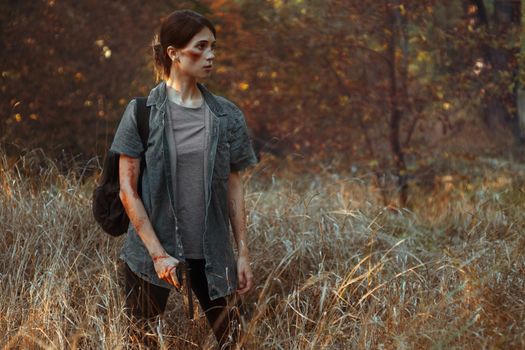
Ramsey's Ellie is older now, more confident, but also more reckless. She's 19 in the show (19 in the game too), and Ramsey captures that teenage certainty that she's right about everything. Her performance in Episode 6, which adapts one of the game's most controversial scenes, is career-defining. I won't spoil it, but if you've played the game, you know the scene I mean. She absolutely nails it.
New additions: Kaitlyn Dever as Abby. This was the most anticipated casting decision. Dever is incredible. She brings a physicality to the role that's intimidating. She trained for six months with a stunt coordinator and it shows. Her Abby is muscular, intense, and deeply human. The show gives her backstory earlier and more comprehensively than the game did. That helps. You understand her motivations by Episode 3 instead of having to wait until the game's midpoint. Some fans will say this undercuts the narrative's shock value. I say it makes the tragedy hit harder because you see both sides from the start.
Isabella Merced as Dina is warm and charming. She and Ramsey have great chemistry. Their relationship is one of the few sources of lightness in an otherwise grim season. Young Mazino as Jesse is solid but underused — he gets less screen time than in the game, which is a shame because his character provides moral grounding.
The Changes from the Game
Showrunner Craig Mazin and Neil Druckmann made several changes. Some work. Some don't.
The biggest change is the structure. The game tells its story nonlinearly, jumping between Ellie's present-day journey in Seattle and Abby's past. The show tells the story mostly linearly, with flashbacks woven in. This makes the narrative easier to follow for non-players. But it sacrifices the gut-punch of the game's big reveal. In the game, you don't know why Abby does what she does until halfway through. The show reveals it by Episode 3. I'm torn on this. The show's approach is more humane — it asks you to empathize with all characters, not just the protagonist. But the game's approach is more emotionally devastating.
Another change: the show expands the time between the events of Season 1 and Season 2. In the game, it's about 4 years. In the show, it's 5 years. This allows for more world-building. We see Jackson grow into a thriving community. We meet new characters, like a doctor named Elena who runs the settlement's clinic. These additions make the world feel lived-in.
The biggest risk: the show changes Ellie's final decision. I won't say what it changes to, but it's different from the game's ending. Some will love it. Some will hate it. I'm still processing it. On one hand, it feels more hopeful. On the other hand, it undercuts the game's central theme about the cycle of revenge. I need to rewatch it before I decide how I feel.