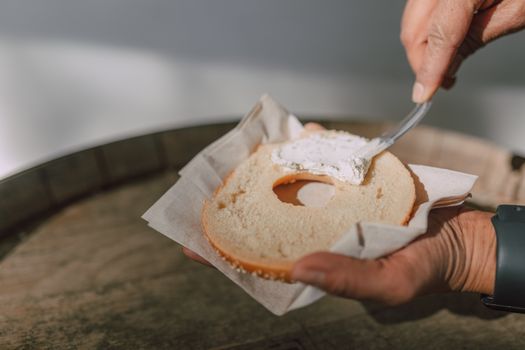
If you've bought a bagel in the last two weeks, you've probably noticed something strange. Either the cream cheese costs extra — like, a lot extra — or the little plastic tub is smaller, or the store just doesn't have it. In New York City, where I live, this is basically a crisis. People are angry. There have been memes. I saw a man on the subway holding a plain bagel with no cream cheese, staring at it like it had betrayed him.
It's not just a New York thing. Cream cheese shortages have been reported in grocery stores across the country. Kraft Heinz, which makes Philadelphia cream cheese — the dominant brand — issued a statement on May 28th acknowledging 'supply chain disruptions' and saying they are 'working to increase production as quickly as possible.' But the shelves are still empty in many places. Prices have doubled in some markets. A 16-ounce block that cost $3.49 in April is now $6.99 on Amazon Fresh.
So what the hell happened? I spent the last week talking to dairy farmers, food industry analysts, and even a bagel shop owner to find out. The answer is more complicated than I expected, and it involves cows, climate change, and a weird chain reaction that started three years ago.
The Short Version: It's a Milk Problem
Cream cheese is made from cream, which is made from milk. And milk production in the United States has been declining. According to the USDA, milk production in 2025 was down 1.4% from 2024, and the first quarter of 2026 is down another 2.1%. That might not sound like a lot, but it's a significant drop for an industry that usually grows every year.
The reason? Fewer cows. The US dairy herd has shrunk to its smallest size in over a decade. Dairy farmers have been leaving the business at an alarming rate. Between 2020 and 2025, over 8,000 dairy farms closed in the US. That's about 15% of all dairy farms. The ones that remain are producing less milk per cow, partly due to heat stress from climate change, and partly because the price of feed has gone up, making it less profitable to keep cows productive.
"It's a death by a thousand cuts," said Tom Miller, a dairy farmer in upstate New York who has been in the business for 40 years. I drove up to his farm on Tuesday. He showed me his milking parlor, which was half-empty. He used to milk 300 cows. Now he milks 180. "I can't afford to feed more. Corn is expensive. Hay is expensive. And the price I get for milk hasn't gone up enough to cover it."
The Specifics: Why Cream Cheese Got Hit Harder
Not all dairy products are affected equally. Fluid milk prices have gone up, but not dramatically. Cheese prices have risen, but nothing like cream cheese. So why is cream cheese the victim here?
It turns out that cream cheese requires a specific type of cream — high-fat cream — and the production process is more complex than making cheddar or mozzarella. Kraft Heinz uses a proprietary culture and a specific aging process that takes time. When the supply of cream is tight, cream cheese gets squeezed because the cream can be used for other things (like butter, which also has high demand). And because Philadelphia cream cheese has such a dominant market share — over 60% — any disruption at Kraft's factories has an outsized effect.