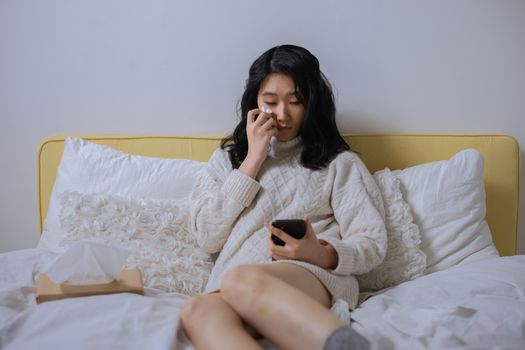
If you’ve scrolled through TikTok recently, you’ve probably seen it: videos of young people crying. Not fake crying. Real, messy, tear-streaked faces. The captions say things like “no reason, just needed it” or “emotional release.” The hashtag #cryingfornoreason has over 2.5 billion views as of this week. And it’s not going away.
I’ll admit: my first reaction was skepticism. Is this just another attention-seeking trend? Another way to commodify vulnerability? But after watching dozens of these videos and talking to creators and psychologists, I’ve changed my mind. There’s something real happening here.
The Origins: From ‘Sad Girl’ to ‘Emotional Health’
The trend isn’t entirely new. The “sad girl” aesthetic has been around since Tumblr, and crying in public has been normalized by celebrities like Adele and Emma Chamberlain. But this feels different. These aren’t stylized, curated tears. They’re raw. Many creators explicitly say they’re not sad — they’re just releasing built-up tension.
A 2025 study from the University of Minnesota found that 68% of Gen Z respondents said they “cry without a clear trigger” at least once a month. The researchers linked this to the chronic stress of the past few years — climate anxiety, economic uncertainty, social media pressure. Crying, they argue, might be a healthy coping mechanism.
What the Psychologists Say
Dr. Sarah Kim, a clinical psychologist I spoke to, said the trend has both positive and negative aspects. “On one hand, normalizing emotional expression is healthy. We’ve spent decades teaching people, especially men, to suppress tears. That’s harmful. On the other hand, there’s a risk of performing distress for validation. Some people might cry not because they need to, but because they want engagement.”
She pointed out that crying releases oxytocin and endorphins, which can actually improve mood afterward. So if someone cries for 30 seconds and feels better, that’s a win. But if they feel pressured to cry on camera to fit in, that’s a problem.
The Creators’ Perspective
I interviewed Mia, a 22-year-old creator from Portland with 300,000 followers. She posted her first crying video in March. “I had a terrible day — I’d just lost my job. I started crying and thought, ‘I’m going to record this.’ I wasn’t trying to be artistic. I just wanted to be honest.” The video got 2 million views. “The comments were incredible. People said ‘thank you for being real’ or ‘I cried today too.’ I felt less alone.”