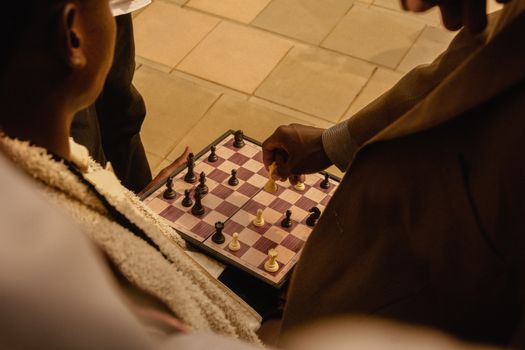
It started with a sign. A handwritten piece of cardboard taped to the window of a coffee shop in southeast Portland: "Free chess. Thursdays 7 PM. Beginners welcome."
I walked past it for three weeks before I went in. I'm not a chess player. I know the rules — vaguely — but I've never been good at it. I figured it would be full of serious players with timers and notebooks. But I was curious.
What I found was something I didn't expect: a community that had formed almost by accident. And it made me think about how rare those spaces are becoming.
The Coffee Shop: Unassuming and Unpretentious
The shop is called The Daily Grind — yes, that name — and it's the kind of place that looks like it's been there forever. Mismatched furniture, exposed brick, a chalkboard menu with handwriting that's almost illegible. The coffee is good but not fancy. The pastries are fine but not life-changing. It's not trying to be anything special.
That's probably why it works.
On a random Thursday night, I walked in at 7:15. The place was packed. Not with the hipster crowd you'd expect in Portland, but with a mix of people: college students, retirees, families with kids, a few people in work uniforms. There were seven chess boards set up on tables, and more people were waiting to play.
The vibe was casual. No tournament brackets, no prizes, no pressure. People played, talked, laughed. A woman in her 60s was teaching a 10-year-old how to castle. Two college kids were playing blitz games with a clock, trash-talking each other between moves. Someone had brought cookies.
How It Started: The Owner's Story
I talked to the owner, a woman named Maria who's been running the shop for 12 years. She told me the chess nights started almost by accident.
"I had a regular who would come in and play chess on his phone," she said. "He asked if I had a board. I didn't. He brought one. Then another regular asked to play. Then they started inviting friends. Eventually, I had five people coming in every week asking to play. So I bought a few boards and made it official."
She laughed. "I don't even know how to play. I just like seeing people here."
That's the thing about community spaces — they don't need to be planned. They just need a spark. Someone willing to show up consistently. A space that welcomes them. And then the magic happens.
The Regulars: Characters You'd Recognize
I went back for three consecutive Thursdays. I got to know some of the regulars.
There's Dave, a retired postal worker in his 70s. He's been playing chess since he was a kid. He brings his own board, an antique wooden set that belonged to his father. He plays anyone who asks, but he's patient — he'll stop mid-game to explain a strategy to a beginner. "Everyone starts somewhere," he told me. "I lost my first 50 games."
There's Maya, a 28-year-old software engineer who moved to Portland six months ago. She found the chess night on Meetup and came alone. "I didn't know anyone in the city," she said. "This is how I made friends. Now I have a whole group."
There's Leo, a 12-year-old who comes with his dad. Leo is surprisingly good. He beat me in 12 moves. He didn't gloat, just smiled and offered to show me the trap I fell into. His dad sat nearby, drinking coffee and watching with obvious pride.
And there's Jenna, a barista who works at the shop. She doesn't play chess — she says she's "too impatient" — but she makes sure everyone has water or coffee, and she'll sit with someone who's waiting for a game. She's the unofficial host, making sure no one feels left out.
Why This Matters Now
We talk a lot about the loneliness epidemic. About how people are more isolated than ever, how third spaces are disappearing, how we've lost the places where community happens. But stories like this remind me that it doesn't take much to fix it.
A chess board. A Thursday night. A sign in a window.
The people I met at The Daily Grind weren't there because they love chess. Some of them do, sure. But most were there because they wanted to be around other people. They wanted a regular, reliable, low-pressure place to connect. And they found it.
Maria told me she's started offering other events now — a book club on Tuesdays, a knitting circle on Saturdays. She said the knitting circle has 15 regular members. "I didn't know anyone here knitted," she said. "But they were looking for a place."
What I Learned From Losing at Chess
I lost every game I played. Every single one. I'm not good at chess, and three weeks of Thursday nights didn't change that. But I learned something more important: losing isn't the point. The conversation between moves is the point.
I talked to Dave about his childhood in Pittsburgh. I argued with Maya about whether AI will ever beat humans at chess in a way that matters (she said it already has, I said it hasn't changed the game for humans). I watched Leo beat three adults in a row and felt genuine joy for him.
I haven't been back in a month. Life got busy. But I'm going again next Thursday. And I'm bringing cookies.
If you're looking for a place to belong, here's my advice: find something small. A book club. A running group. A chess night at a coffee shop. Show up consistently. Talk to people. Lose some games. It's not about the activity. It's about the people who show up to do it together.