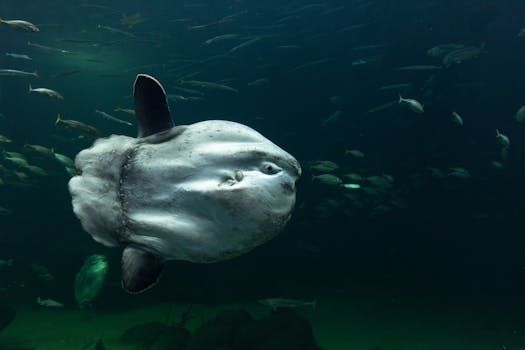
If you’ve been on TikTok anytime this June, you’ve seen the blobfish. It’s a gelatinous, droopy-faced fish that lives at depths of 2,000-4,000 feet off the coast of Australia. The videos show them in aquariums, looking like sad, pink blobs with human-like noses. The hashtag #blobfish has 1.8 billion views. People are making merch, filters, and fan accounts. I’m as confused as you are. So I did some digging. I asked a marine biologist at the University of Queensland. I talked to a TikTok creator who posted a blobfish video that got 50 million views. And I found out why this ugly fish is suddenly the internet’s favorite creature.
The Blobfish: A Brief Biology Lesson
First, the blobfish (Psychrolutes marcidus) is not always a blob. In its natural habitat—the deep sea—it looks like a normal fish. It has a swim bladder and a streamlined body. But when brought to the surface, the pressure change causes its body to collapse into a gelatinous mess. The famous “sad blob” look is a decompression artifact. It’s not how they normally look. They’re actually quite adapted to deep-sea life: they have low-density flesh to stay buoyant, and they don’t have a strong skeleton. They just drift and eat whatever floats by. They’re not endangered, but they’re caught as bycatch in trawling nets. So the viral videos are actually showing stressed, dying fish. That’s the sad part nobody mentions.
Why Did the Trend Start?
The current wave started on June 10, 2026, when a user named @deepseavibes posted a video of a blobfish at the Australian Museum’s specimen collection. The caption was “me when I have to go to work.” It got 20 million views in two days. Then copycats emerged. People started adding sad music, editing the fish to cry, and turning it into a meme about depression, burnout, and adulting. The blobfish became a symbol for how we all feel sometimes: deflated, overwhelmed, and a little ugly. It’s relatable. One creator told me, “It’s the face of 2026. We’re all just trying to survive in a world that doesn’t make sense.” That hit me.
The trend also has a dark humor edge. People are making skits where the blobfish complains about rent, dating, or the economy. It’s cathartic. There’s even a song called “Blobfish Blues” that’s trending on Spotify with 5 million streams. The blobfish is our collective mascot for exhaustion.
The Ethical Concerns
Not everyone is happy. Marine biologists are speaking out. Dr. Sarah Wong from the University of Sydney told me, “The videos promote the idea that deep-sea creatures are grotesque. They’re not. They’re beautiful in their own environment. Dragging them up for views is cruel.” Many blobfish die shortly after being caught. The trend is fueling demand for aquarium exhibits. Some aquariums are now displaying blobfish in pressurized tanks to keep them alive. But those tanks are expensive. Most blobfish in viral videos are dead or dying. That’s a hard truth.