I've been a bad sleeper my entire adult life. I've tried everything — weighted blankets, white noise machines, melatonin gummies, meditation apps, even one of those 'smart' alarm clocks that tracks your sleep cycles. Nothing worked consistently. So when the Park Hyatt New York launched their $3,000-a-night Sleep Suite in May 2026, I was skeptical but curious. Three thousand dollars is a lot of money for a night's sleep. But if it actually worked, wouldn't that be worth it?
I booked a night in early July. Let me be clear: I paid for this myself. The hotel didn't comp me, I didn't tell them I was writing about it. I wanted the real experience.
Checking In
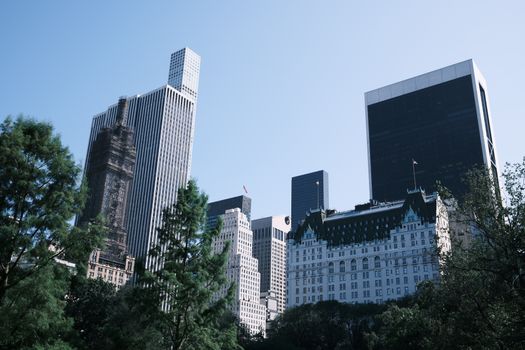
The Park Hyatt New York is on West 57th Street, a block from Central Park. The Sleep Suite is on the 25th floor, corner room, with floor-to-ceiling windows facing south. The first thing I noticed when I walked in was the lighting. It was warm — not yellow, not white, but a soft amber hue that felt like sunset. The room had no overhead lights; everything came from table lamps and sconces. The curtains were blackout, but not the cheap kind. They sealed the windows completely, no light leakage.
I was greeted by a 'sleep concierge' named Elena. She handed me a tablet that controlled everything in the room — temperature, lighting, sound, even the mattress firmness. Then she explained the 'sleep program.' The room has a circadian lighting system that gradually shifts from warm amber to deep red to complete darkness as bedtime approaches. The mattress is by Somnology, a company I'd never heard of, but Elena claimed it uses NASA-derived materials to regulate temperature.
Elena asked me about my sleep habits. I told her I tend to wake up around 3 AM and can't fall back asleep. She nodded like she'd heard it a thousand times. 'We have solutions for that,' she said. 'But first, let's start with the pre-sleep ritual.'
The Pre-Sleep Ritual
At 8 PM, the room's system initiated the 'wind-down' mode. The lights shifted to a deep red. The temperature dropped to 65 degrees Fahrenheit. A playlist started playing through hidden speakers — low, ambient tones with no discernible melody. I was told to take a bath using the provided magnesium flakes and lavender oil.
The bathroom is worth mentioning. It has a soaking tub big enough for two people, heated floors, and a rainfall shower with eight different spray settings. The magnesium bath was genuinely relaxing. I stayed in for 30 minutes, reading a paper book (the hotel provides a selection of non-fiction titles about sleep science, because of course they do).
At 9 PM, Elena knocked on the door with a 'sleep tea' — a blend of chamomile, valerian root, and passionflower. It tasted like grass, honestly, but it was soothing. She also brought a small device that looked like a high-end diffuser. 'This releases a proprietary blend of essential oils,' she said. 'Pine, cedar, and a touch of vetiver. Studies show these scents lower cortisol levels.'
I was skeptical but willing to try anything.
The Bed
Let's talk about the bed. The Somnology mattress is adjustable — not in the cheap hospital-bed way, but subtly. I could increase or decrease firmness in different zones using the tablet. I set it to medium-soft for my shoulders and medium-firm for my hips. The sheets were 1,000-thread-count Egyptian cotton, which felt like sleeping on butter. The pillows were a mix of down and memory foam, offered in four firmness levels. I chose 'medium' for my head and 'soft' to hug.
I climbed into bed at 9:30 PM. The room was completely dark — not even the glow of electronics. I'd put my phone in the room's Faraday bag (yes, they provide a bag that blocks all signals). The only sound was the ambient playlist, barely audible.