⚔️ VS Battle

Should You Buy a $100,000 Electric Pickup in 2026? The Rivian R1T vs. The Ford F-150 Lightning vs. The Tesla Cybertruck

Should You Buy a $100,000 Electric Pickup in 2026? The Rivian R1T vs. The Ford F-150 Lightning vs. The Tesla Cybertruck

Let me start with a confession: I love trucks. I grew up in a family that drove F-150s and Silverados. The idea of an electric pickup was, for a long time, an oxymoron in my mind. Trucks are supposed to be loud, tough, and slightly obnoxious. But then I drove a Rivian R1T last year, and it completely changed my mind. The silence, the instant torque, the ability to power a campsite for a week from the truck's batteries—it all made sense. Now, in 2026, the electric truck market is no longer a novelty. It's a serious segment with three very different contenders: the Rivian R1T, the Ford F-150 Lightning, and the Tesla Cybertruck. I spent the last two weeks driving all three back-to-back to answer a simple question: if you have $100,000 to blow on an EV truck, which one do you buy?

The Contenders: A Quick Primer

First, let's set the stage. The Rivian R1T has been out since 2022 and has received a major refresh for 2026. It starts around $73,000 but the top-end Quad-Motor with the Max Pack battery is over $95,000. The Ford F-150 Lightning is the legacy play. It starts at $55,000, but the fully loaded Platinum with the extended range battery is about $90,000. Then there's the Tesla Cybertruck, which finally arrived in late 2024 and is now in full production. The 'Cyberbeast' tri-motor version starts at $99,990. So all three can touch the $100k mark. But they approach the truck concept from wildly different angles. Let's break it down.

Driving Experience: The Rivian Wins Handily

I'll get this out of the way: the Rivian R1T is the best-driving electric truck on the market. Period. The quad-motor setup allows for true torque vectoring—it can send power to any wheel independently. The result is a truck that handles like a sports car. It's responsive, planted, and surprisingly nimble on twisty roads. The air suspension is plush and adjustable. In off-road mode, it can raise itself to over 14 inches of ground clearance. I took it on a muddy trail, and it crawled over rocks like a mountain goat. The steering is precise, and the braking is strong. It's a joy to drive.

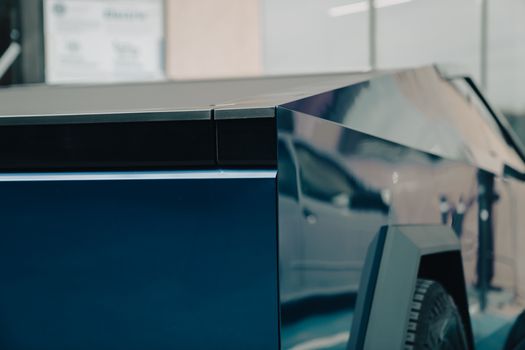
The Ford F-150 Lightning is a different beast. It's a traditional truck with an electric powertrain. The ride is comfortable but a bit floaty—it feels its weight. The steering is numb. It's not sporty, but it's perfectly adequate for daily driving. The instant torque is nice, but the Lightning is more about utility than excitement. The Tesla Cybertruck is... weird. The steer-by-wire system takes getting used to—the steering wheel doesn't even turn all the way around. The ride is firm, and the cabin is polarizing. But it accelerates like a supercar. The Cyberbeast does 0-60 in 2.6 seconds, which is absurd for a 7,000-pound truck. It's fun in a straight line, but the handling is not as refined as the Rivian. For overall driving pleasure, the Rivian wins by a wide margin.

Utility and Towing: The Ford (And the Surprise Tesla Feature)

Here's the thing about trucks: they need to work. I tested all three by towing a 6,000-pound travel trailer on a 100-mile loop. The Ford F-150 Lightning is the most traditional truck in this group. It has a proper truck bed with standard tie-downs, and it tows like a champ. The range drop is significant (about 50% when towing), but it's predictable and stable. The Ford's onboard scales and trailer sway control work well. For a family that needs a daily driver and a weekend tow rig, the Lightning is the most practical.

The Rivian R1T tows well, but the bed is smaller. It's a 4.5-foot bed, which is fine for gear but too short for a sheet of plywood. The tow mode is excellent—the cameras give you a great view of the hitch. But the range drop is similar to the Ford's. The Rivian's big advantage is its gear tunnel—a lockable storage compartment between the cab and the bed. It's genius for storing tools or camping gear. But for pure utility, the Ford edges ahead.

The Tesla Cybertruck is a wildcard. It tows fine, but the range drop is even worse—about 60%. The 'Cyberbed' is huge (6 feet) and has a tonneau cover that's integrated. But the lack of traditional tie-downs is annoying. The angular design also makes it hard to see the bed from the cabin. However, the Tesla has a secret weapon: the 240-volt outlet in the bed. It can power a welder or even charge another EV. That's genuinely useful for construction crews. For utility, I'd give the edge to the Ford, but the Tesla has unique features that some people will love.

Range and Charging: A Tale of Two Networks

Range is the elephant in the room. The Rivian R1T with the Max Pack is rated at 410 miles. The Ford F-150 Lightning Extended Range is 320 miles. The Tesla Cybertruck Cyberbeast is 340 miles. But real-world range varies. In my testing, the Rivian actually got close to its EPA rating. The Ford was about 10% less. The Tesla was about 15% less in real-world driving. But the real difference is charging infrastructure. Tesla's Supercharger network is still the best in North America. The Cybertruck can use it natively. The Rivian and Ford can now use Superchargers with an adapter, but it's not as seamless. For long road trips, the Tesla has a clear advantage. If you stay local, it doesn't matter. But if you're towing cross-country, the Tesla is the only one that makes it feasible.

Interior and Tech: The Tesla is a Spaceship, The Rivian is Cozy

The interiors are wildly different. The Rivian R1T has a beautiful, modern cabin. The materials are high-quality, the seats are comfortable, and the infotainment system is intuitive. It feels like a premium adventure vehicle. The Ford F-150 Lightning's interior is... a Ford. It's functional, but the plastics are hard, and the tech is dated. The SYNC system works fine, but it's not as polished as the competition. The Tesla Cybertruck's interior is minimalist and polarizing. The giant steering yoke is annoying. The single 18.5-inch screen controls everything, which is a pain for adjusting side mirrors. But the software is the best in the industry—Google Maps integration, Sentry Mode, and over-the-air updates are top-notch. If you're a tech nerd, you'll love it. If you want a cozy, traditional truck, you'll hate it.

The Price: Value for Money

Let's talk dollars and sense. The Rivian R1T Quad Max Pack is about $95,000. The Ford F-150 Lightning Platinum is $90,000. The Tesla Cybertruck Cyberbeast is $100,000. None of these are cheap. But you get different things for your money. The Ford is the most practical daily driver and tow vehicle. The Rivian is the best all-arounder—it's fun, capable, and well-built. The Tesla is the most technologically advanced and has the best charging network, but it's also the most polarizing. For pure value, I'd pick the Rivian. It does almost everything well, and it's a joy to own. The Ford is a close second if you need traditional truck capability. The Tesla is for early adopters who want to be seen.

The Verdict: The Rivian R1T Wins (For Now)

After two weeks, three trucks, and a lot of coffee, I'm picking the Rivian R1T as the best $100,000 electric truck in 2026. It's the most balanced. It drives the best, it's incredibly capable off-road, and it has a premium interior that makes you feel good every time you get in. The Ford F-150 Lightning is the smart choice for traditional truck buyers. The Tesla Cybertruck is the statement piece. But the Rivian is the one I'd buy with my own money. It's not perfect—the charging network is not as good as Tesla's, and the bed is small. But as an overall package, it's the best truck in the segment. Go drive one. You'll see what I mean.

TR
Sarah Mitchell

We spend hours researching and testing before we write anything. If something changes, we update the article. About our process →