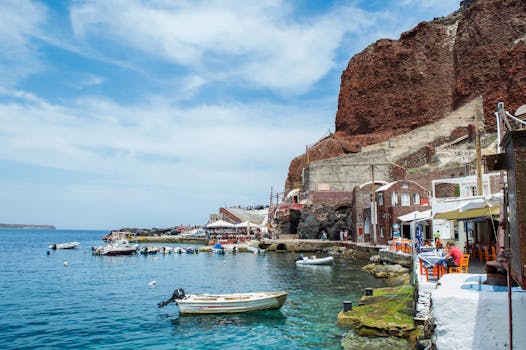
I have complicated feelings about Santorini. On one hand, it's objectively one of the most beautiful places on Earth—those white-washed buildings, the blue domes, the sunsets that look like they're painted by a celestial artist. On the other hand, it has become a victim of its own popularity.
I was there last week (yes, in peak season—it was the only time my wife could get time off), and I watched hundreds of tourists cram into Oia's narrow streets at 7:30 PM, all holding phones up to capture the sunset. It was like a human traffic jam with a beautiful backdrop. I couldn't enjoy it. So I did something different: I went to Akrotiri.
Why Oia Has Become a Nightmare
Let me be clear: Oia is stunning. The postcards don't lie. But the reality of visiting in June is that you're sharing that view with about 5,000 other people. The cruise ships dock at Fira and disgorge thousands of passengers daily. The main street in Oia becomes a shuffling line of humanity. Restaurants have two-hour waits. The famous blue-domed church at the end of the main street? You'll queue for 20 minutes just to take a photo.
I spoke to a local shopkeeper named Dimitri who has lived in Oia for 40 years. He told me that this year has been the busiest he's ever seen. 'June used to be quiet,' he said in his accented English. 'Now it's like August every day.' The cruise ship arrivals have increased by 25% compared to 2024, according to the Santorini Port Authority.
Look, I'm not saying don't go to Oia. Go, but go early. Like, 7 AM early. Have breakfast there, take your photos, and leave before 10 AM. The sunset is beautiful, but it's not worth the crowds.
Akrotiri: The Real Santorini
About 20 minutes south of Fira by car lies Akrotiri, and this is where Santorini starts to feel like the place you dreamed about. It's less developed, less crowded, and more authentic. The landscape is different too—instead of the iconic white buildings, you get dramatic red cliffs, black sand beaches, and ancient ruins.
The star attraction is the Akrotiri archaeological site, a Minoan Bronze Age settlement that was buried in volcanic ash around 1627 BC. Think of it as Greece's Pompeii. It was discovered in 1967 and excavations have uncovered incredibly preserved buildings, frescoes, and pottery. The site is covered by a modern bioclimatic roof that protects the ruins while allowing natural light in.
What amazed me is how empty it was. I visited on a Tuesday afternoon and there were maybe 30 other people there. Compare that to Oia, where every square foot has a tourist on it. The entry fee is €12, and it's worth every cent. You can walk through ancient streets, see three-story buildings with intact windows, and marvel at the sophistication of a civilization that existed 3,600 years ago.
Where to Eat: Skip the Overpriced Cliffside Restaurants
In Oia, you're paying for the view. A basic Greek salad can cost €18. A glass of local wine? €12. The food is fine, but you're paying triple what it's worth.
In Akrotiri, I ate at a taverna called To Psaraki, which is right on the water. The owner, Maria, told me her family has been running it for three generations. I had the grilled octopus (€14), a massive Greek salad (€9), and a carafe of house wine (€8). The octopus was the best I've ever had—tender, smoky, with just lemon and oregano. The view of the caldera was just as good as any restaurant in Oia, but I paid a third of the price.
Other recommendations: Metaxi Mas in Exo Gonia (not technically Akrotiri, but close) serves incredible traditional dishes. The fava bean purée is legendary. And for a splurge, Selene in Pyrgos has a tasting menu that showcases Santorini's unique ingredients—the cherry tomatoes here taste like candy because of the volcanic soil.