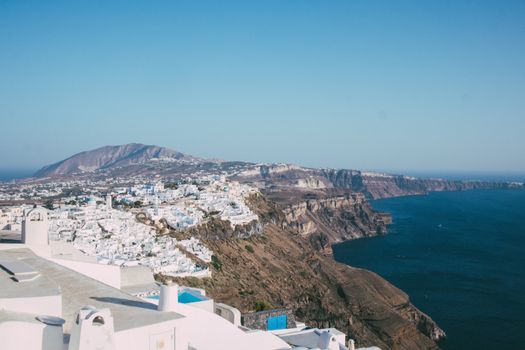
I flew into Santorini on June 1st, 2026, fully expecting to hate it. I'd read the horror stories. The Instagram mobs jostling for sunset photos in Oia. The cruise ship crowds disgorging thousands of people into the narrow streets of Fira. The hotel prices that had gone stratospheric, with basic rooms in Imerovigli going for 800 euros a night. I came prepared to be disappointed.
And for the first two days, I kind of was. Oia at sunset is a nightmare. People were literally pushing each other to get a photo of the famous blue-domed church against the orange sky. I saw a woman almost knock over a small child to get her shot. The streets of Fira were so packed at 11 AM that you couldn't walk at a normal pace. You shuffled. Like a zombie in a mall.
But then I talked to a local. A hotel owner named Dimitris who grew up on the island. He looked at me with a kind of weary amusement and said: "You're doing it wrong." And he was right. I spent the next four days doing everything differently, and I ended up having one of the best travel experiences of my life. Here's what I learned.
The Sunset Thing: Just Skip It
Look, the sunset in Oia is beautiful. It is genuinely stunning. The way the light turns the whitewashed buildings pink, then orange, then deep blue — it's a natural spectacle. But it's not worth the crowd. It's not worth the anxiety. It's not worth the woman who almost knocked over a child.
Here's a secret that every local knows: the sunset looks almost exactly the same from dozens of other spots on the island. You can watch it from a caldera-facing restaurant in Fira. You can watch it from the ruins of Ancient Thera, high above Kamari beach. You can watch it from a boat in the middle of the caldera. Or you can do what I did: walk to Skaros Rock in Imerovigli, sit on a cliff, and watch it alone. There were maybe ten other people there. It was quiet. I could hear the waves below. The sunset was every bit as gorgeous as the one in Oia, minus the screaming crowds.
I'm not saying you should never go to Oia. It's a beautiful village with incredible architecture. But go at 7 AM. Go when the cruise ships haven't arrived yet. Walk the empty streets. Take your photos. Leave by 9 AM. That's the move.
Where to Stay: Skip Fira, Skip Oia, Go to Pyrgos
Most tourists stay in Fira (the capital) or Oia (the famous one). Both are convenient, both have great views, and both are packed wall-to-wall with tourists from April to October. I made the mistake of booking a hotel in Fira for my first two nights. It was fine. But it was also loud, crowded, and felt like a theme park version of Santorini.
For the rest of my trip, I moved to a guesthouse in Pyrgos. Pyrgos is a small village perched on a hill in the center of the island. It used to be the capital before Fira took over. It's quieter, more authentic, and way more affordable. My room cost 180 euros a night — a fraction of what I'd paid in Fira. The view from the rooftop terrace was incredible: you could see both sides of the island, the Aegean Sea stretching out in every direction.
Pyrgos also has some of the best food on the island. I ate at a tiny taverna called Kritikos, run by a grandmother who doesn't speak English and doesn't care. She brought me a plate of tomato fritters, grilled octopus, and a salad with tomatoes that tasted like they'd been picked that morning. The total bill was 22 euros. In Oia, that meal would have cost 60 euros and come with a side of attitude.