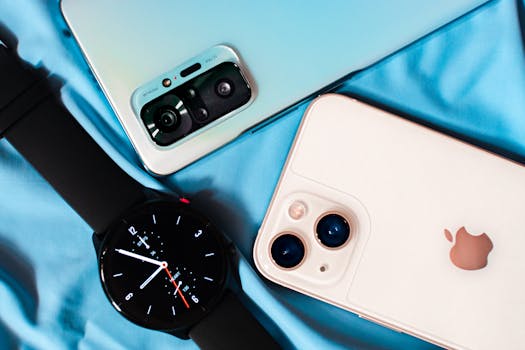
It’s June 2026, and the smartwatch wars are heating up again. Samsung launched the Galaxy Watch 7 on May 15, and Apple followed with the Watch Series 10 on May 22. If you’re in the market for a new smartwatch, you’re probably wondering which one to get. I’ve been wearing both for the past two weeks — one on each wrist, like a nerd — and I’m ready to give you the real take. No PR fluff, just what you need to know.
Design and Display: Two Very Different Philosophies
The Galaxy Watch 7 keeps the classic round design from previous models. It looks like a traditional watch, which I like. The display is a 1.5-inch Super AMOLED panel with 480x480 resolution. It’s bright, crisp, and the always-on mode doesn’t drain the battery as much as before. The rotating bezel is back — thank goodness. It’s one of the best navigation tools on any smartwatch.
The Apple Watch Series 10, on the other hand, is a square pill that’s become memorable. The display is slightly larger — 1.9 inches — with a resolution of 396x484. It’s also brighter, hitting 3,000 nits compared to the Galaxy’s 2,000. That matters if you’re outside a lot. The Series 10 is thinner and lighter than the Galaxy Watch 7, which makes it more comfortable for sleep tracking.
Winner for design? It’s subjective. I prefer the round, classic look of the Galaxy. But the Apple Watch is objectively more readable in direct sunlight.
Health Tracking: The Real Battle
Both watches have the usual suspects: heart rate, ECG, blood oxygen, sleep tracking. But the new additions are where it gets interesting.
The Galaxy Watch 7 introduces a “stress sweat” sensor that analyzes your sweat for cortisol and electrolyte levels. It’s meant for athletes who want to optimize hydration during workouts. I tested it during a 10K run, and it said I was “moderately stressed” — which, fair. The data seemed consistent with how I felt. But is it a real difference? Not really. It’s cool but not essential.
The Apple Watch Series 10 adds a “respiratory health” feature that uses the microphone and sensors to detect early signs of sleep apnea. It’s the first smartwatch to get FDA clearance for this. I don’t have sleep apnea, so I can’t vouch for its accuracy, but early reviews from sleep specialists are positive. Apple also improved the heart rate sensor for atrial fibrillation detection. This could genuinely save lives.
Winner: Apple Watch Series 10. The respiratory health feature is a big deal.
Battery Life: The Pain Point
Smartwatch battery life is still terrible. The Galaxy Watch 7 lasts about two days with heavy use — three if you’re careful. The Apple Watch Series 10 lasts about 1.5 days. Yes, Apple’s is worse. But Apple has faster charging (0 to 80% in 45 minutes), while Samsung takes about an hour. So you can top up during a shower. Still, if you want to track sleep continuously, neither is great. You’ll have to charge daily.