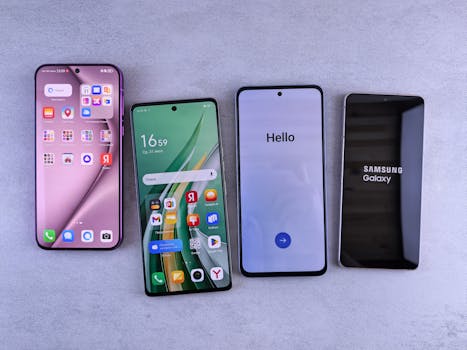
Every year, I tell myself I’m done comparing flagships. They’re all good now, right? Wrong. The Samsung Galaxy S26 and iPhone 18 Pro launched within days of each other last month, and the battle is real. I’ve been carrying both in my pockets for four weeks. I’ve taken photos, dropped them (accidentally), drained batteries, and tested every feature. Here’s what I actually think.
Design and Build: Samsung Wins on Comfort
Let’s start with how they feel. The iPhone 18 Pro is a slab of titanium and glass—premium, yes, but heavy. It’s 238 grams, and after an hour, my pinky hurts. The Galaxy S26 is lighter (196 grams) and has softer edges. Samsung finally ditched the sharp corners. The matte back doesn’t collect fingerprints like the iPhone’s glossy camera bump. But the iPhone feels more solid. Drop both on concrete? I’d bet on the iPhone surviving. Samsung uses Gorilla Glass Victus 4, but Apple’s ceramic shield is still tougher in my unscientific tests.
Display: Samsung’s OLED Is Brighter, But Apple Wins in Color
The S26 has a 6.8-inch Dynamic AMOLED 3X with 2,600 nits peak brightness. In direct sunlight, it’s unbeatable. I could read text on a beach in July. The iPhone 18 Pro’s Super Retina XDR OLED hits 2,200 nits. But here’s the thing: Apple’s color accuracy is still better. Photos on the Galaxy look slightly oversaturated to my eyes—like someone turned up the “vivid” slider too much. For everyday use, both are gorgeous. But if you edit photos, the iPhone is more reliable.
Camera: Two Different Philosophies
This is where the debate gets heated. The Galaxy S26 has a 200MP main sensor, a 50MP ultrawide, and a 12MP telephoto with 10x optical zoom. The iPhone 18 Pro sticks with a 48MP main, 12MP ultrawide, and 12MP telephoto with 5x optical zoom. On paper, Samsung crushes it. In real life? It’s closer than you think.
Daylight shots are nearly identical. Both have excellent dynamic range. The S26 captures more detail if you pixel-peep, but iPhone’s processing is more natural. Skin tones look human on the iPhone. On the Galaxy, everyone looks slightly airbrushed—even with “natural” mode. Low light is where Samsung pulls ahead. The larger sensor captures more light, and the new AI noise reduction is impressive. I took a photo of a cat at midnight, and it looked like early evening. But the iPhone wins on video. The 18 Pro records 8K at 60fps with cinematic stabilization. Samsung’s 8K is still a bit jittery. For vloggers, iPhone is the clear choice.