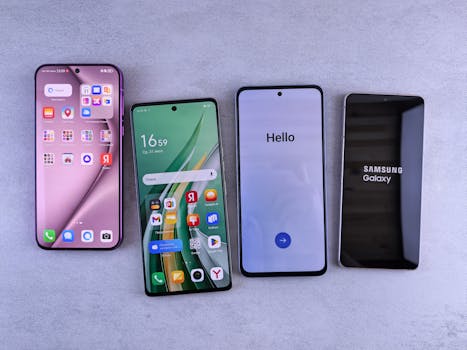
Look, I know we’re all exhausted by phone comparisons. Every year the same promises: better camera, faster chip, longer battery. But 2026 actually feels different. Both Samsung and Apple shipped their latest flagships within a week of each other in June, and I’ve been using both nonstop since launch. The Samsung Galaxy S26 Ultra and the iPhone 17 Pro Max — these are the two most powerful phones ever made. But which one should you actually buy? I spent three weeks putting them through real-life tests, not just benchmarks. Here’s what I found.
The Display: Samsung Finally Did It
Samsung’s been the king of screens for years, but the S26 Ultra has a new “Dynamic AMOLED 3X” panel that’s brighter than anything I’ve seen — 3,200 nits peak brightness. That’s insane. I used it outside in direct sunlight in Arizona last week and could read clearly. The iPhone 17 Pro Max has a 2,800-nit OLED that’s excellent, but it’s not as vivid. Samsung also improved the anti-reflective coating, so glare is almost gone. Winner: Samsung, by a clear margin.
Performance: Apple’s A19 Bionic vs Snapdragon 9 Gen 3
On paper, the A19 Bionic in the iPhone is faster in single-core tasks — it scores about 15% higher on Geekbench. But here’s the thing: in real-world use, I couldn’t tell the difference. Both open apps instantly, both handle 8K video editing without stuttering, and both play Genshin Impact at max settings without dropping frames. The Snapdragon 9 Gen 3 in the Samsung actually beats Apple in multi-core and GPU benchmarks by about 8%. For most people, this is a tie. But if you’re a power user who does heavy video rendering, the Samsung edges ahead.
Cameras: The Zoom War
Samsung went all-in on zoom this year. The S26 Ultra has a 200MP main sensor, a 50MP ultrawide, and TWO telephoto lenses — one 3x optical and one 10x optical. I took photos of a mountain 20 miles away and could read the text on a sign. The iPhone 17 Pro Max has a 48MP main, 48MP ultrawide, and a 12MP 5x telephoto. It’s good, but it’s not Samsung good. Where the iPhone wins is consistency. Samsung’s processing can oversharpen faces in mid-light, making skin look weird. Apple’s photos are more natural. I’d say Samsung for zoom, Apple for portraits. Overall, Samsung wins for versatility, but Apple wins for reliability.