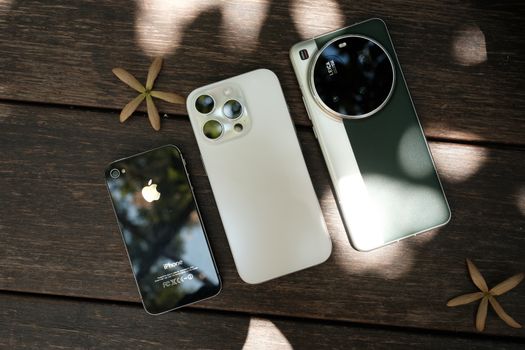
Every year, the same question pops up: Samsung or Apple? And every year, fanboys on both sides scream about specs that don't matter to real people. So I decided to actually live with both phones for a month. Starting June 1, I carried the Samsung Galaxy S26 and the iPhone 17 Pro as my daily drivers. I took photos, made calls, played games, and generally abused them. Here's what I actually think.
Before I start, let me say this: both phones are incredible. You won't make a bad choice. But depending on what you value, one might be significantly better for you. Let's break it down.
Design and Build: A Tale of Two Approaches
The Galaxy S26 is Samsung's most refined design yet. It's thinner than last year — 7.2mm — and lighter at 185 grams. The titanium frame feels premium, and the matte glass back is a fingerprint magnet (but at least it looks clean for five seconds after you wipe it). The camera bump is minimal, just three lenses stacked vertically. It's understated and elegant.
The iPhone 17 Pro, on the other hand, is chunkier. It's 8.1mm thick and weighs 210 grams. The titanium frame is similar, but Apple's design language is more industrial — sharp edges, flat sides, that iconic notch (though it's smaller now, just a pill-shaped cutout). The camera bump is massive, housing three lenses and a LiDAR sensor. It looks serious, like a tool rather than a fashion accessory.
Which is better? Honestly, it's personal. The Samsung feels more comfortable in hand — it's lighter and curves into your palm. The iPhone feels more substantial, like you're holding something important. I preferred the Samsung for daily use; my girlfriend preferred the iPhone. No winner here, just preference.
Display: Samsung Still Wins (But Apple is Close)
Samsung has been making the best phone displays for years, and the S26's 6.8-inch Dynamic AMOLED 4X is no exception. It hits 2600 nits peak brightness, which is absurd — I could read it in direct sunlight without squinting. The 120Hz refresh rate is buttery smooth. Colors are punchy and vibrant without being cartoonish.
The iPhone 17 Pro has a 6.3-inch Super Retina XDR display that hits 2400 nits. It's also 120Hz now (finally, Apple caught up). The difference is subtle: the Samsung is slightly brighter and more color-accurate out of the box, while Apple's display is more natural and calibrated. For watching movies, the Samsung pops more. For editing photos, the iPhone is more trustworthy. I'll give the edge to Samsung for sheer wow factor, but it's close.
Cameras: The Real Test
Here's where things get interesting. Both phones have triple camera setups: main, ultrawide, and telephoto. But they approach photography differently.
The Galaxy S26 has a 200MP main sensor (down from 200MP? Same sensor, but improved processing). Photos are sharp, with excellent dynamic range. Samsung's processing is more aggressive — it oversharpens slightly, and skin tones can look a bit plasticky. But for social media, these photos look stunning. The 5x optical zoom is solid, and the 10x hybrid zoom is usable in good light.
The iPhone 17 Pro has a 48MP main sensor with a quad-pixel design. Apple's processing is more natural — skin tones look like skin, not wax. The colors are accurate, and the HDR is subtle. The 5x optical zoom is also excellent. But Apple's computational photography is where it shines: Night mode is cleaner than Samsung's, and Portrait mode has better edge detection. The LiDAR sensor helps with low-light autofocus, which is noticeably faster than the Samsung.