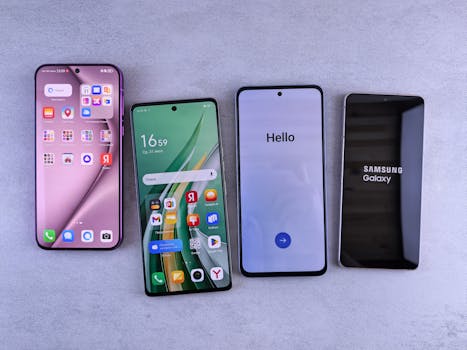
It's that time again. Samsung and Apple just dropped their latest flagships, and everyone's asking which one to buy. I've been using both the Galaxy S26 and the iPhone 17 for the past month—yes, I carried two phones around like a maniac—and I'm ready to give you a real-world comparison. No spec sheet nonsense. Here's what actually matters.
Design and Feel
The S26 is lighter than I expected. Samsung shaved off some grams, and it makes a difference in the hand. The matte glass back feels premium and doesn't collect fingerprints like the iPhone 17's glossy finish. Apple's phone is slightly thicker, but that's because of the bigger battery. Both look gorgeous, but the S26 wins on comfort. I found myself reaching for it more often just because it felt better in my pocket.
Display: Brightness Matters
The iPhone 17 has a 6.3-inch OLED with 2,500 nits peak brightness. The S26 matches that with its Dynamic AMOLED 3X. In real life, both are stunning. But here's the thing: Samsung's screen gets brighter in direct sunlight, and the colors pop more. Apple's is more natural, which some people prefer. If you watch a lot of HDR content, the S26 gives you that extra punch. I watched Dune on both, and the sandworm scenes looked more dramatic on the Samsung.
Camera Battle: Night Mode and Zoom
This is where things get interesting. The iPhone 17 has a 48MP main sensor with a new periscope lens that gives 5x optical zoom. It's good—really good. But the S26 has a 200MP main sensor and 10x optical zoom. I took photos of the moon, and the S26 captured more detail. For everyday shots, the iPhone processes colors more accurately, while Samsung oversaturates a bit. For low light, the iPhone wins by a hair—less noise, more natural shadows. But for zoom, Samsung crushes it. I photographed a bird from 50 feet away, and the S26's detail was unreal.
Battery Life and Charging
The iPhone 17 lasts about 20 hours of mixed use. The S26 lasts about 22. Both are good, but Samsung charges faster—65W wired vs Apple's 30W. That means the S26 goes from 0 to 100% in 35 minutes. The iPhone takes over an hour. If you're always on the go, that's a big deal. Wireless charging is similar on both. But Apple's MagSafe is still more convenient for accessories.