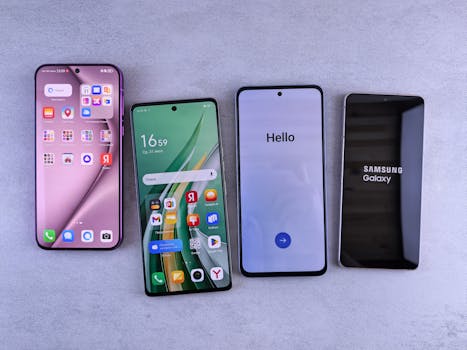
Every year, the same question pops up: Samsung or Apple? And every year, the answer gets more complicated. Both companies have been throwing insane hardware at us. The Galaxy S26 Ultra launched in February with a 200MP camera and a built-in S Pen. The iPhone 17 Pro Max dropped in September with a titanium frame and Apple's A19 Bionic chip.
I've been lucky enough to use both as my daily drivers for the past month. I didn't just run benchmarks—I actually lived with them. Took photos on vacation, made calls, played games, watched movies. Here's the unvarnished truth about which one is better, and why.
Design and Build: One Is a Brick, One Is a Jewel
The first thing you notice is weight. The S26 Ultra is heavy. Like, 234 grams heavy. Combine that with its boxy shape and sharp corners, and it feels like holding a small brick. The iPhone 17 Pro Max, by contrast, is 221 grams but feels lighter because of its rounded edges. Both are IP68 rated, but the iPhone's Ceramic Shield front and back feel more premium. The Samsung has a slight edge in screen durability—Gorilla Glass Victus 3 is tough stuff. But in day-to-day handling, the iPhone wins. It's easier to hold, less likely to slip out of your hand, and the matte titanium finish doesn't attract fingerprints like Samsung's glossy glass.
Display: Samsung Still Rules, But Apple Is Catching Up
Samsung's displays have been the best in the business for years, and the S26 Ultra doesn't disappoint. That 6.9-inch Dynamic AMOLED 2X panel with 3200x1440 resolution is stunning. Colors pop, blacks are truly black, and the 120Hz refresh rate is buttery smooth. But here's the thing—Apple's Super Retina XDR display on the iPhone 17 Pro Max is no slouch. It's 6.9 inches too, with a 2796x1290 resolution. In direct comparison, the Samsung has slightly higher peak brightness (2600 nits vs 2500 nits) and better contrast. But honestly? In normal use, you won't notice the difference unless you put them side by side. Both are gorgeous. The iPhone's ProMotion 120Hz feels just as smooth. The real differentiator is the S Pen—if you take notes or draw, the S26 Ultra wins by a mile.
Camera: The Battle of the Zooms
This is where things get interesting. The S26 Ultra has a 200MP main sensor, a 12MP ultrawide, two telephoto lenses (3x and 10x optical), and a 12MP front camera. The iPhone 17 Pro Max has a 48MP main sensor, a 12MP ultrawide, a 12MP telephoto with 5x optical zoom, and a 12MP front camera.
In good lighting, both take incredible photos. Color science differs—Samsung leans toward saturated, punchy colors; Apple goes for more natural, true-to-life tones. I prefer Apple's approach for people photos (skin tones look more realistic), but Samsung's is better for landscapes and food shots.
Where Samsung dominates is zoom. The 10x optical zoom on the S26 Ultra is a game-changer. I took photos of a hawk from 200 feet away, and the detail was sharp. The iPhone's 5x zoom is good, but cropping in reveals noise. Samsung's 100x Space Zoom is still a gimmick (don't use it), but the 30x hybrid zoom is genuinely usable. For nighttime shots, the iPhone's larger pixels and better software processing give cleaner images with less noise. Samsung's night mode is decent, but it often over-brightens shadows, making scenes look artificial.