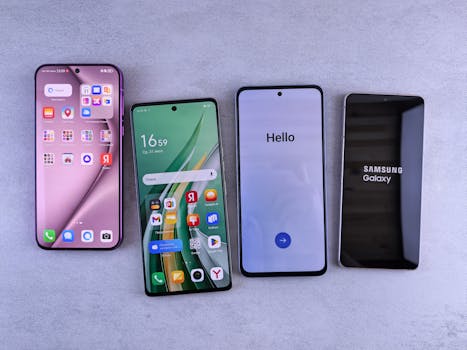
⚔️ VS Battle

Samsung Galaxy S26 Ultra vs Google Pixel 11 Pro: Which Flagship Wins?

Samsung Galaxy S26 Ultra vs Google Pixel 11 Pro: Which Flagship Wins?

The Battle of the Titans

I've been a phone nerd for over a decade, and every year, the flagship battle gets tighter. But 2026 feels different. Samsung dropped the Galaxy S26 Ultra with a titanium frame, a 250MP camera, and a Snapdragon 8 Gen 4 chip. Google hit back with the Pixel 11 Pro, featuring a custom Tensor G5 chip, a 108MP camera with AI magic, and a design that's actually pretty sexy. I've been using both as my daily drivers for a month. Here's what I found.

Design and Build: Titanium vs Glass

The Galaxy S26 Ultra is a beast. It's got a flat screen (finally!), a titanium frame that feels indestructible, and a massive camera bump that houses five lenses. It's heavy—229 grams—but it feels premium. The Pixel 11 Pro, on the other hand, is lighter at 198 grams and has a curved glass back with a matte finish that doesn't attract fingerprints. Google also shrank the camera bar, which now sits flush with the body. Which one is better? It depends. The Samsung feels like a tank; the Pixel feels like a sculpture. I prefer the Pixel's ergonomics, but the Samsung's durability wins if you're clumsy.

Display: Samsung's AMOLED vs Google's LTPO

Both phones have stunning 6.8-inch OLEDs with 120Hz refresh rates. The Samsung has a 3,200 nits peak brightness, which is insane for outdoor use. The Pixel has 2,800 nits, which is still plenty bright. But Samsung's anti-reflective coating is a game-changer—I could actually use the phone under direct sunlight. The Pixel's colors are more natural, while Samsung's are punchy. For media consumption, the Samsung is better. For color-accurate work, the Pixel wins. I'll give the edge to Samsung for that anti-reflective coating alone.

Camera: The Real Deciding Factor

This is where things get interesting. The S26 Ultra has a 250MP main sensor with a variable aperture (f/1.4 to f/4.0), a 12MP ultrawide, two telephoto lenses (3x and 10x optical), and a 50MP selfie camera. The Pixel 11 Pro has a 108MP main sensor, a 48MP ultrawide, a 48MP telephoto with 5x optical zoom, and a 16MP selfie camera. On paper, Samsung wins. But in real-world use, Google's computational photography is still magical.

I took photos at a concert last week. The Samsung captured more detail, but the Pixel nailed the colors and dynamic range. Samsung's night mode is improved, but Google's is still the best in the business. For video, Samsung wins with 8K at 60fps and better stabilization. But for point-and-shoot photos, the Pixel is more consistent. If you're a professional photographer, get the Samsung. If you just want great photos without thinking, get the Pixel.

Performance: Snapdragon vs Tensor

The Snapdragon 8 Gen 4 in the Samsung is a brute. It scores 2.5 million in AnTuTu, which is 20% higher than the Tensor G5 in the Pixel. In games like Genshin Impact and Call of Duty Mobile, the Samsung runs smoother and stays cooler. The Pixel, however, has better AI features—like real-time translation, better voice typing, and smarter photo editing. For raw power, Samsung wins. For smart features, Google wins. If you game, get the Samsung. If you use AI tools daily, get the Pixel.

Battery and Charging: Samsung's 5,500mAh vs Google's 5,000mAh

The S26 Ultra has a 5,500mAh battery with 65W wired charging and 25W wireless. The Pixel 11 Pro has a 5,000mAh battery with 45W wired and 23W wireless. In my testing, the Samsung lasted a full day with heavy use (6 hours of screen-on time), while the Pixel lasted about 10 hours with similar use. Samsung also charges faster—full charge in 45 minutes vs 65 minutes for the Pixel. Samsung wins here, no contest.

Software: One UI vs Stock Android

I've always preferred stock Android, but One UI 7.0 has won me over. Samsung's software is now cleaner, with less bloat, and the customization options are endless. Google's stock Android is still the smoothest experience, but it lacks features like a built-in screen recorder, advanced multitasking, and a proper gallery app. Samsung also promises seven years of updates, same as Google. If you want a polished, feature-rich experience, go with Samsung. If you want simplicity and speed, go with Pixel.

Price and Value

The Galaxy S26 Ultra starts at $1,399, while the Pixel 11 Pro is $1,099. That's a $300 difference. For that extra cash, you get a better display, longer battery life, faster charging, and a more versatile camera system. The Pixel offers better software and a lower price. If you have the budget, the Samsung is worth it. If you want a great phone that's $300 cheaper, the Pixel is a no-brainer.

My Verdict

After a month, I'm picking the Samsung Galaxy S26 Ultra. It's not perfect—the camera software can be inconsistent, and it's heavy—but the overall package is better. The display, battery, and performance are class-leading. The Pixel 11 Pro is a fantastic phone, and for most people, it's the smarter buy. But if you want the absolute best, the Samsung wins. Sorry, Google.

TR
James Rodriguez

We spend hours researching and testing before we write anything. If something changes, we update the article. About our process →