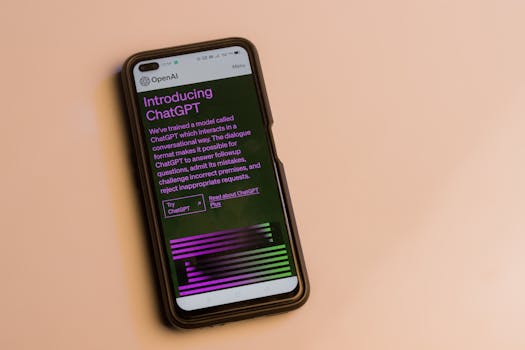
I was scrolling through my feed last Tuesday when a headline stopped me cold: 'OpenAI Employees Leak GPT-5 Details.' My first thought was, here we go again. Another hype cycle. But then I actually read the memo—a screenshot of an internal Slack message, apparently from a senior researcher—and my jaw dropped.
The memo claims GPT-5 will have 'genuine reasoning' capabilities, not just better pattern matching. It talks about a model that can hold a coherent conversation for hours without losing context, solve novel math problems it's never seen, and—this is the kicker—generate code that compiles on the first try 90% of the time. If even half of this is true, we're looking at a seismic shift.
I've been following AI development since the GPT-3 days, and I've learned to be skeptical. Every release is supposed to change everything. But here's what's different: the leak specifically mentions a 'memory layer' that persists across sessions. Imagine ChatGPT that remembers your mom's birthday, that you hate mushrooms, and that you're planning a trip to Japan next year—without you having to repeat yourself. That's not just an upgrade; it's a fundamentally different relationship with technology.
But the real question everyone's asking is: does this kill Google search? I don't think it's that simple. OpenAI's CEO Sam Altman has been unusually quiet on Twitter (X, whatever), which usually means something big is brewing. Meanwhile, Google's stock dipped 2% on the news. But here's what nobody's talking about: Google has its own secret weapon—Gemini Ultra 2, which reportedly passed the 'bar exam' with a score in the 98th percentile. The search giant isn't lying down.