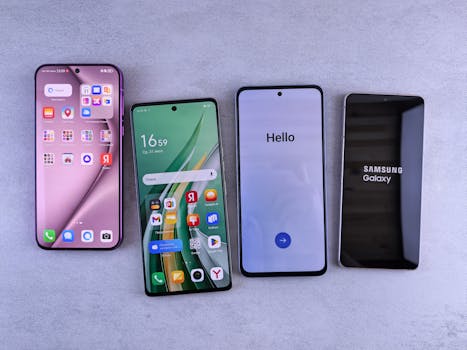
Let me start with a confession: I love foldable phones. Not in a "this is the future" way — more like a "this fits in my pocket and also works as a mini tablet" way. When the OnePlus Open launched last year, I assumed it would be a nice try but ultimately fall short of Samsung's refined Fold line. After using both for a month straight, I was wrong.
The Galaxy Z Fold 6 is a great phone. The OnePlus Open is a better foldable. Here's why.
Weight and Feel: You'll Notice the Difference
The Z Fold 6 weighs 239 grams. The Open weighs 245 grams. That's basically the same on paper. But the difference in how they feel in hand is dramatic. The Open is thinner when unfolded — just 5.9mm vs. the Fold's 6.6mm. It sounds minor, but when you're holding it open like a mini tablet, that extra thinness makes it feel much more natural. The Fold, by contrast, feels a bit chunky, like a paperback you've left in the rain.
The hinge also matters. The Open's hinge is smoother and has less resistance. The Fold's hinge feels tighter and more deliberate. Some people prefer that. I don't. The Open opens and closes with one hand effortlessly. The Fold requires two hands most of the time.
The Cameras: Not Even Close
Samsung has always struggled with camera consistency on the Fold series. The Fold 6 uses a 50MP main sensor, a 12MP ultrawide, and a 10MP telephoto (3x). The OnePlus Open uses a 48MP main, a 48MP ultrawide, and a 64MP telephoto (3x). But specs only tell half the story.
In real-world shooting, the Open produces more natural colors and better dynamic range. The Fold tends to oversaturate and sometimes blows out highlights. I took photos of a sunset in Golden Gate Park. The Fold made the sky look cartoonishly orange. The Open captured the actual warm tones I saw with my eyes. Night mode is also noticeably better on the Open — less noise, more detail.
There's a reason professional photographers have started carrying the Open as a backup camera. The Fold just doesn't compete.
Software: One UI vs. OxygenOS
This is where personal preference really kicks in. Samsung's One UI is feature-rich but bloated. It has DeX, Good Lock customization, and a ton of multitasking options. But it also has duplicate apps, Samsung Pass, Samsung Health, Samsung Wallet, and about 47 other Samsung-branded things you probably don't need.
OxygenOS on the Open is cleaner. It's closer to stock Android with a few thoughtful additions. The multitasking is actually better — you can have three apps open at once, and the app pairs feature lets you save a split-screen layout for later. The Open also has a proper taskbar that stays accessible, while Samsung's is hidden behind a swipe gesture. Small thing? Maybe. But I used it constantly.
Both phones support stylus input, but the Samsung S Pen Fold Edition is tiny and uncomfortable. The Open doesn't have a built-in silo, but I'd rather carry a Bluetooth stylus than use Samsung's weird stub.