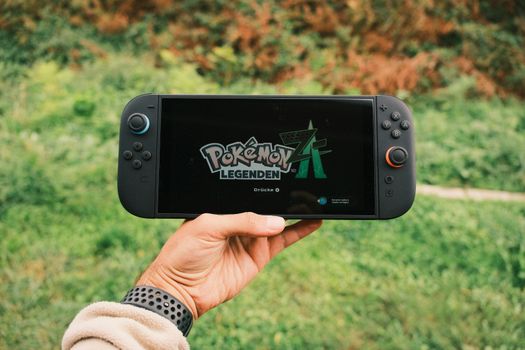
The handheld gaming war is officially in full swing. Nintendo launched the Switch 2 on June 5, just two weeks after Valve released the Steam Deck OLED refresh in late May. I've been lucky enough to test both extensively, and I've got a clear winner — but it might surprise you.
Let me start with a confession: I'm a lifelong Nintendo fan. I grew up with the Game Boy, the DS, and the original Switch. So going into this, I was rooting for the Switch 2. But after a month of side-by-side testing, I have to be honest about where each device shines and where it falls flat.
Hardware and Design: Two Very Different Philosophies
The Switch 2 is bigger than its predecessor — it's got a 7.9-inch OLED screen, up from 7 inches on the original OLED model. It's still lightweight at 420 grams, and the Joy-Cons click in satisfyingly. Nintendo kept the same basic design language, which is fine, but it feels like a refinement rather than a revolution.
The Steam Deck OLED, meanwhile, is a chunky 640 grams. It's heavier, thicker, and less portable. But here's the thing: the Steam Deck's ergonomics are miles ahead. The grips on the back make it comfortable to hold for hours, whereas the Switch 2's flat design starts cramping my hands after about 90 minutes of intense gaming.
Performance: The Steam Deck Crushes It
This is where the comparison gets interesting. The Switch 2 uses a custom NVIDIA Tegra chip that's roughly on par with a PlayStation 4 Pro. It can run games like The Legend of Zelda: Tears of the Kingdom at a smooth 60 fps, which looks gorgeous on that OLED screen. But the Steam Deck OLED runs PC games like Cyberpunk 2077 and Baldur's Gate 3 at medium settings with 30-45 fps. That's a level of graphical fidelity the Switch 2 simply can't match.
But raw power isn't everything. The Switch 2's advantage is its custom hardware — games are built specifically for it, so they run efficiently. The Steam Deck runs PC games that were designed for desktops, so you're constantly tweaking settings to find the sweet spot.
The Game Library: Nintendo's Secret Weapon
Here's where the Switch 2 wins, and it's not even close. Nintendo's first-party lineup is unmatched. Super Mario Odyssey 2 launched alongside the Switch 2, and it's the best Mario game in a decade. Metroid Prime 4 is coming in August. And you can play almost every Switch game from the past nine years.