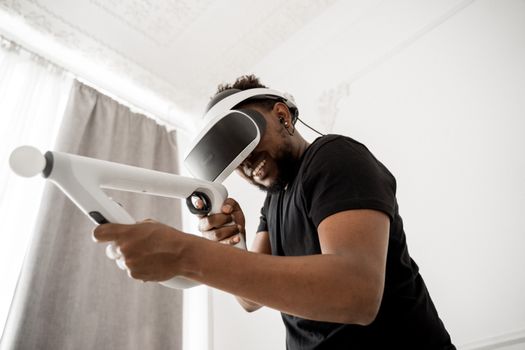
How I Got Into the Demo Room
A friend who works at Meta invited me to a closed-door demo of their Orion AR glasses last Thursday. I walked in skeptical—I’ve tried Google Glass back in 2013 and Apple Vision Pro last year, and both left me unimpressed for different reasons. But Orion? I walked out genuinely excited for the first time in years.
Meta’s been quiet about this project since they announced it in 2024, but rumors have been swirling. The glasses look almost normal—thick frames, but not dorky. They weigh 85 grams, about the same as a pair of Ray-Bans. No external battery pack, no giant headset. Just glasses that project holograms into your field of view. And they work without being tethered to a phone or computer.
The Hardware Magic
The tech inside is insane. Orion uses micro-LED projectors embedded in the frames that beam light onto a silicon carbide waveguide. That’s fancy talk for “it creates a clear, bright image even in sunlight.” I tested them in a brightly lit room, and the holograms were crisp—like having a 100-inch screen floating three feet in front of you. The field of view is 70 degrees, which is way wider than any previous AR glasses I’ve tried. You can see messages, maps, and even 3D objects without turning your head.
Battery life is the weak spot—about 3 hours of active use. But the charging case works like AirPods: pop them in for 30 minutes and get another hour. Meta’s aiming for 6 hours by the consumer launch in 2027. I’m not holding my breath, but it’s promising.
What You Can Actually Do
The killer app is navigation. I walked around the demo room with a route projected onto the floor—arrows appeared on the ground like a video game. It felt natural, not disorienting. You can also see text messages as floating bubbles that you dismiss with a tap on the frame. Calls come through the built-in speakers, which are surprisingly clear for such tiny drivers. I called my wife from the demo—she said I sounded like I was on speakerphone, but it was acceptable.
Gaming is where it shines. I played a simple AR game where virtual drones flew around the room. I had to shoot them by looking and tapping. The latency was near-zero—the tracking uses eye and hand gestures via a wristband that reads neural signals. No camera-based hand tracking that fails in low light. The wristband feels like a thick bracelet, and it can detect finger movements even if your hand is in your pocket. Creepy but effective.