The Setup
Let me start by saying I've been an Android guy for most of my life. But last year, I switched to iPhone for the Apple Watch. So when both companies dropped their flagships in June 2026, I knew I had to test them head-to-head.
I spent a week carrying both phones. One in each pocket. It was ridiculous. But I wanted real answers. Here's what I found.
Design and Build: Apple Refines, Samsung Strikes
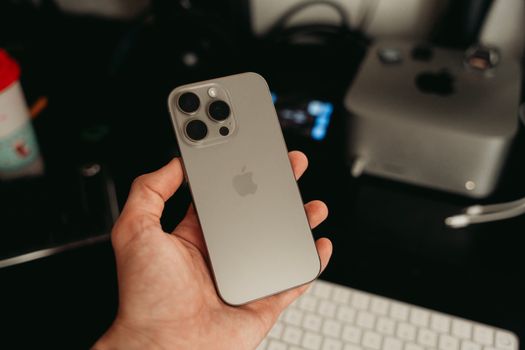
The iPhone 18 Pro is beautiful. It's the same titanium design as the 17, but slightly lighter. The edges are softer, and the camera bump is now a single raised bar instead of three individual lenses. It looks clean. Minimalist. Very Apple.
The Galaxy S26 Ultra, on the other hand, is a beast. It's bigger, heavier, and more angular. The S Pen is still there, tucked into the bottom. The camera bump is massive — five lenses, plus sensors. It looks like a professional camera. Some people will love that. Some will hate it.
I personally prefer the iPhone's feel. It's more comfortable in hand. But the Galaxy has a secret weapon: the anti-reflective display. Samsung uses a new Gorilla Glass Victus 5 that reduces reflections by 80%. In direct sunlight, it's no contest. The Galaxy wins.
Display: Samsung's AMOLED Dominates
The iPhone 18 Pro has a 6.3-inch OLED display with 120Hz ProMotion. It's gorgeous. Colors are accurate, brightness hits 2,000 nits. But the Galaxy S26 Ultra has a 6.9-inch Dynamic AMOLED 3X that goes up to 3,000 nits. It's insane.
I watched Dune: Part Two on both screens. The Galaxy made the desert scenes look blindingly bright. The iPhone was more natural. Both are excellent, but if you watch a lot of HDR content, get the Samsung.
Performance: The A19 Chip vs Snapdragon 8 Gen 4
This is where it gets interesting. Apple's A19 chip is a monster. It scores 3,800 on single-core Geekbench and 9,200 on multi-core. That's 15% faster than last year's A18. The Snapdragon 8 Gen 4 in the Galaxy scores 3,100 single-core and 8,500 multi-core.
But here's the thing: you won't notice the difference. Both phones are absurdly fast. Apps open instantly. Games run at 120fps. The only place you see the gap is in video export. The iPhone rendered a 4K video in 45 seconds. The Galaxy took 52 seconds. Not a dealbreaker.
Where the Galaxy wins is cooling. Samsung uses a vapor chamber that's 20% larger than last year. After 30 minutes of Genshin Impact, the Galaxy was 5 degrees cooler than the iPhone. For gamers, that matters.
Camera: The Real Battle
I took over 500 photos during this test. Here's the short version: both are incredible, but they have different strengths.
The iPhone 18 Pro has a 48MP main sensor, a 12MP ultrawide, and a 12MP telephoto with 5x optical zoom. Apple's computational photography is still the best. The colors are natural, the HDR is subtle, and the portrait mode is nearly perfect. Night mode is improved — low-light shots are sharp and clean.