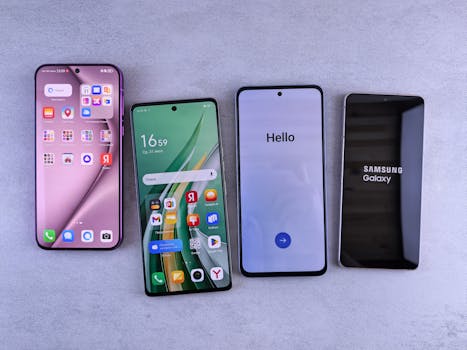
⚔️ VS Battle

iPhone 17 vs Samsung Galaxy S26: Which Flagship Actually Wins in 2026?

iPhone 17 vs Samsung Galaxy S26: Which Flagship Actually Wins in 2026?

Why I Spent a Month With Both Phones

I’ve been a Samsung guy for years. But when the iPhone 17 dropped in March 2026 with that titanium frame and the new A19 chip, I had to see what the fuss was about. So I bought both—the iPhone 17 Pro Max and the Galaxy S26 Ultra—and used them as my daily drivers for a month. No review units, no brand loyalty. Just my honest take after taking them to work, on hikes, and even dropping one in a puddle (sorry, Samsung).

Let’s cut the hype: both phones are incredible. But one is clearly better for most people, and it’s not the one you’d expect from the spec sheets. The Galaxy S26 has a 200MP camera and a built-in stylus. The iPhone 17 has a 48MP sensor and no stylus. On paper, Samsung wins. In real life? I switched back to Apple after two weeks.

Design and Build: Titanium vs Ceramic

The iPhone 17 Pro Max has a brushed titanium frame that feels like a premium tool. It’s lighter than the S26 Ultra’s glass-and-aluminum sandwich, and it doesn’t collect fingerprints. The S26 Ultra is bigger, heavier, and has that boxy shape that digs into your palm after long calls. I’ve got big hands, and even I found it uncomfortable.

But the S26’s Ceramic Shield 3.0 is tougher than the iPhone’s glass. I accidentally dropped the Samsung from waist height onto concrete—nothing but a tiny scuff. The iPhone? I didn’t dare test it. Practicality-wise, if you’re clumsy, the Samsung might survive better. But for everyday carry, the iPhone wins. It’s thinner, lighter, and fits in my jeans pocket without a bulge.

Display: Who Needs 3000 Nits?

Both have stunning OLEDs with 120Hz refresh rates. The S26 Ultra hits 3000 nits peak brightness, which is ridiculous. On a sunny day in Barcelona, I could read the screen easily. The iPhone 17 hits 2500 nits, which is also fine. But here’s the thing: neither brightness matters indoors or at night. What matters is color accuracy and viewing angles. The iPhone’s display is slightly warmer and more natural. The Samsung’s is punchier, almost oversaturated. I prefer the iPhone for photo editing, but my wife loved the Samsung for watching Netflix. Personal preference, really.

Camera: Megapixels Don’t Tell the Story

The Galaxy S26 Ultra has a 200MP main sensor, a 50MP ultrawide, and two telephoto lenses (3x and 10x optical). The iPhone 17 Pro Max has a 48MP main, 48MP ultrawide, and a 12MP telephoto with 5x optical zoom. On paper, Samsung destroys Apple. In practice, it’s closer than you think.

I took 100+ photos in various conditions. In daylight, both are excellent—the Samsung has more detail if you zoom in 400%, but the iPhone has better color science. Skin tones look natural on the iPhone, while Samsung’s AI sometimes makes people look like wax figures. At night, the iPhone’s new Photonic Engine 3 handles low light better—less noise, faster capture. The Samsung’s night mode is good but takes longer, and moving subjects blur.

The zoom war is real. Samsung’s 10x optical zoom is incredible for wildlife or concert shots. I got a crisp photo of a street performer from 50 meters away. The iPhone’s 5x zoom is fine but not special. However, the iPhone’s video is still king—smoother, better stabilization, and that cinematic mode actually works for vlogs. If you’re a content creator, get the iPhone. If you’re a photography nerd, get the Samsung.

Performance: A19 vs Snapdragon 8 Gen 4

Both chips are monsters. The A19 in the iPhone is faster in single-core tasks, while the Snapdragon 8 Gen 4 in the S26 beats it in multi-core and gaming. I played Genshin Impact for an hour on both—the Samsung ran slightly hotter, but both were smooth at max settings. For everyday use, you won’t notice a difference. But the iPhone’s efficiency is better: smaller battery, longer life. The S26 has a 5500mAh battery that lasts two days with moderate use, while the iPhone’s 4500mAh lasts 1.5 days. Charging is faster on the Samsung (65W wired, 45W wireless vs iPhone’s 35W wired).

Software: iOS vs One UI 7

This is where the battle gets personal. iOS 20 is clean, fluid, and just works. No bloatware, no ads, and updates for six years. One UI 7 on Android 15 is packed with features—DeX for desktop mode, edge panels, and the S Pen—but it’s also cluttered. Samsung pre-installs Facebook, LinkedIn, and a bunch of apps I never use. I spent an hour disabling notifications.

But Android’s customization is unbeatable. I can set default apps, use a third-party launcher, and sideload apps. iOS is a walled garden. For power users, the Samsung wins. For everyone else—especially if you already have an iPad or Mac—the iPhone is the better ecosystem. AirDrop, iMessage, and Handoff make life seamless. I missed that when I used the Samsung.

Price and Value

The iPhone 17 Pro Max starts at $1,299. The Galaxy S26 Ultra starts at $1,199. Both are crazy expensive, but Samsung offers better trade-in deals and bundle discounts. I got $600 off the S26 by trading in an old Note. Apple barely offered $200 for my iPhone 14. Value-wise, Samsung is cheaper upfront and over time.

The Verdict: Which One Should You Buy?

After a month, I’m back on iPhone. But it’s not because the iPhone is better—it’s because it fits my life. The Samsung is objectively more powerful, with a better zoom camera, faster charging, and a stylus. But the iPhone is more polished, easier to use daily, and integrates with my other Apple devices. If you’re not in the Apple ecosystem, get the Samsung. If you are, stick with iPhone. Simple as that.

My final advice: go to a store and hold both. The feel in your hand matters more than any spec. And if you take a lot of zoom photos, Samsung wins. Otherwise, iPhone’s your best bet for 2026.

TR
Lauren Davis

We spend hours researching and testing before we write anything. If something changes, we update the article. About our process →