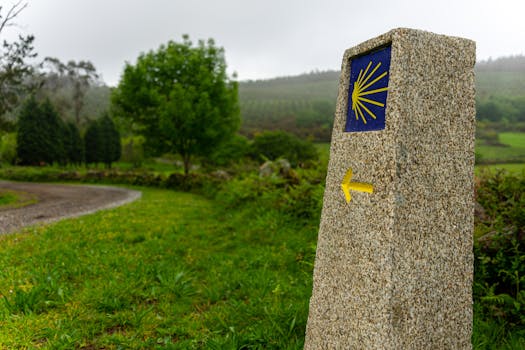
I just got back from walking the Camino de Santiago — specifically, the French Way from Saint-Jean-Pied-de-Port to Santiago de Compostela, about 780 kilometers. I did it in 2019 too, so I wanted to see how things have changed post-pandemic and with all the new tech. I started on May 1 and finished on June 4. The short version: it's more crowded, more digital, but the soul of the Camino is still very much alive. Let me break it down for anyone thinking of doing it this summer.
The Crowds Are Real — Especially at Night
In 2019, I averaged maybe 30-40 pilgrims per day on the trail. This year? I'd say 80-100 on the busiest sections, especially between Sarria and Santiago (the last 100 km). The albergues (hostels) are filling up fast. I called ahead three times and got lucky, but I heard horror stories of people sleeping in parks because they couldn't find a bed. The surge is partly due to the 'Holy Year' effect — 2026 is a Jubilee Year because the Feast of St. James falls on a Sunday, which means special indulgences. The church expected 500,000 pilgrims, and they're on track. My advice: book your accommodation a week in advance if you're walking the last 100 km. And if you're doing the whole French Way, use the Buen Camino app to reserve beds. It's a lifesaver.
The New Tech That Actually Helped
Speaking of apps, the Camino has gone digital in a big way. The official Pilgrim's Office now offers a digital credential (instead of the paper passport) that you can stamp on your phone via NFC. I used it and it worked seamlessly — every albergue, church, and bar had a QR code to scan. It saved me from carrying that flimsy paper folder. Also, the new Camino Weather app (launched in 2025) gives hyperlocal forecasts for each stage, including wind and rain predictions. It warned me about a storm on Day 12 that would have soaked me. I took a rest day instead. Smart. The only downside? Battery life. Most albergues have limited outlets, so I carried a 20,000 mAh power bank. Essential.
The Cost Has Dropped — Here's How
Here's something nobody's talking about: the Camino is actually cheaper than in 2019. I spent about €35 per day on average (€22 for a bed, €12 for food, €1 for a coffee). That's down from €40 in 2019. Why? The Spanish government subsidized albergue prices to attract pilgrims after the pandemic dip. Many municipal albergues now charge €8-10 instead of €12-15. Private albergues are still €15-20, but competition has kept prices low. Also, the 'Menu del Peregrino' (pilgrim menu) is still around €12-14 for three courses with wine, and portions are generous. I ate at a place in Logroño that served a massive plate of paella, salad, bread, and a bottle of Rioja for €12.50. Unbeatable. The only thing that's gotten more expensive is the train to Santiago — about €50 from Madrid. But overall, I spent €1,200 for 35 days including flights from the US. That's a steal.