I'm going to say something that might annoy travel influencers: I'm tired of the same European destinations being pushed every year. Paris is lovely, yes. Rome is historic, fine. But they're crowded, expensive, and honestly, a bit predictable. So when I started planning my summer trip, I decided to go somewhere that felt undiscovered. That's how I ended up in the Azores — a Portuguese archipelago in the middle of the Atlantic Ocean. And I'm convinced it's the best place to visit in Europe right now.
Let me set the scene. It's June 2026, I'm flying direct from Boston to Ponta Delgada (the capital of São Miguel island) on SATA Azores Airlines. Round trip: $380. Yes, under $400. Compare that to a flight to London or Paris, which would cost me $700 minimum. The flight is 4.5 hours — shorter than flying to Los Angeles. I land at 8 AM local time, step out of the airport, and the first thing I notice is the air. It's clean. Like, impossibly clean. The island smells like hydrangeas and the ocean. I already feel calmer.
The Azores are made up of nine islands, but most first-timers start with São Miguel. It's the largest, and it has the most infrastructure for tourists — hotels, restaurants, rental cars. I rented a small car for $30 a day (yes, thirty dollars) and drove to my Airbnb in the village of Furnas. The drive took 45 minutes, and every second was stunning. Green hills, cows grazing on impossibly steep slopes, and the occasional glimpse of the Atlantic. No billboards. No traffic. Just peace.
Furnas is a town built inside a volcanic crater. That means hot springs everywhere. My Airbnb had a private hot spring in the backyard. I'm not joking. I soaked in naturally heated mineral water while looking at a lake surrounded by forest. The water temperature was perfect — about 100°F — and it smelled faintly of sulfur (which sounds bad but is actually charming). I stayed for two hours, reading a book and listening to birds. I haven't felt that relaxed in years.
The food in the Azores deserves its own paragraph. I ate cozido das Furnas, a stew that's cooked underground using volcanic heat. You bury a pot of meats and vegetables in the geothermal soil, leave it for six hours, and dig it up. The result is incredibly tender, flavorful, and unlike anything I've ever tasted. I had it at a restaurant called Tony's, which is basically a family-run spot with plastic chairs and a view of the lake. It cost $12. The wine was $3 a glass. I had three glasses.
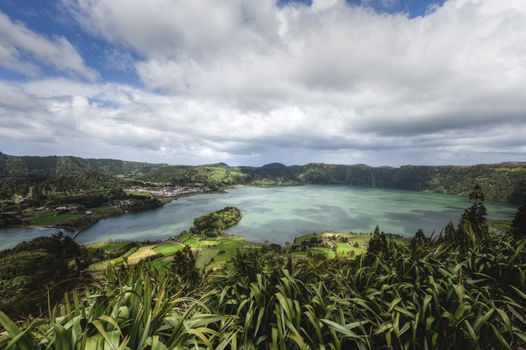
But the real magic of the Azores is the nature. On São Miguel, you have to see Sete Cidades — twin lakes inside a volcanic caldera, one blue and one green. The legend says a princess and a shepherd cried into the lake, and their tears created the two colors. It's touristy (there's a viewpoint with a parking lot full of vans), but it's worth it. The colors are real. They're not Photoshopped. The blue lake is a deep sapphire, and the green one is emerald. I took a photo that I now use as my phone wallpaper.
I also hiked to Lagoa do Fogo, which means "Lake of Fire." It's a crater lake at the top of a mountain. The hike took about two hours, climbing through misty forest and then breaking out into open terrain. At the top, the fog parted, and I saw the lake — completely clear, surrounded by black volcanic sand. I sat there for an hour, eating a sandwich I'd packed. Not another soul in sight. It felt like I was on another planet.