I’ll admit it: I’m a sucker for TikTok food trends. I’ve made baked feta pasta (lived up to the hype), tried the “cucumber sandwich” hack (meh), and even attempted that ridiculous “gigantic pancake” in a waffle maker (disaster). So when “cloud eggs” started popping up on my For You page last week, I knew I had to try them. The premise is simple: separate egg whites, whip them into stiff peaks, form a cloud on a baking sheet, drop the yolk in the center, and bake until golden. The result looks like a puffy, savory cloud with a golden yolk heart. Sounds dreamy, right?
I tried it three times in three different ways. Here’s what actually happened, including the mess, the science, and the surprisingly delicious outcome.
The First Attempt: A Lesson in Patience
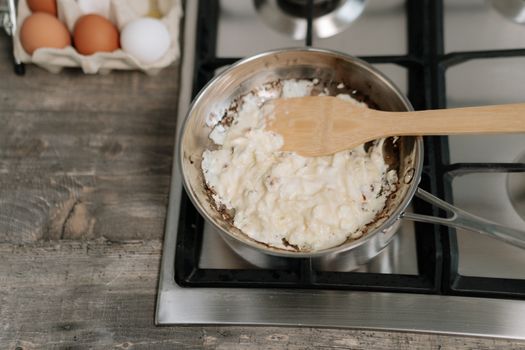
I followed a popular recipe from @thefoodie (3.2 million followers) that called for three eggs, a pinch of salt, and a dash of cream of tartar. The first mistake? I didn’t let the egg whites come to room temperature. Cold whites don’t whip as well. After five minutes of whisking by hand (I was too stubborn to get the stand mixer), I had a foamy mess, not stiff peaks. I threw it in the oven at 350°F anyway, hoping for magic. What came out was a flat, sad egg disc with a hard yolk. It tasted fine—eggs are eggs—but it wasn’t a cloud. It was a puddle. Lesson one: use room temperature whites and a mixer. Patience is not an option; it’s required.
For my second attempt, I used a stand mixer. Three egg whites, a pinch of salt, and half a teaspoon of cream of tartar. In four minutes, I had stiff, glossy peaks. I folded in some shredded cheddar and chives (because why not?), then spooned the mixture into three mounds on a parchment-lined tray, making a well in each for the yolk. Into the oven at 350°F for six minutes, then added the yolks and baked another four. The result? Golden, puffy clouds that actually looked like the videos. The yolks were still runny, and the whites were light and airy. It was genuinely impressive. But here’s the catch: the texture is weird. The whites are so airy that they collapse if you look at them wrong. Eating it with a fork felt like trying to eat a marshmallow that’s also an egg. It’s fun, but not particularly satisfying. A regular fried egg is more substantial.
The Science of the Cloud
So why does this work? It’s all about denaturation and coagulation. Whipping egg whites incorporates air and unfolds the proteins, which then form a stable network when baked. The cream of tartar (an acid) helps stabilize those proteins, preventing them from collapsing. The low oven temperature (350°F) is crucial—too hot, and the whites brown before they set; too low, and they never firm up. I tried 325°F on my third attempt, and it took twelve minutes to get any structure. The perfect temp is 350°F, and the perfect time is about 8-10 minutes total, depending on your oven.