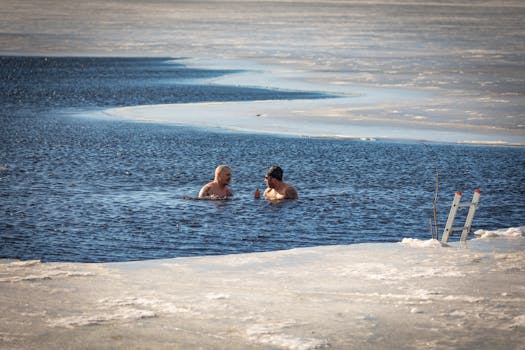
If you've been on TikTok recently, you've seen the videos: people screaming as they submerge themselves in ice-cold water, claiming it cures anxiety, boosts metabolism, and makes them feel like superheroes. The hashtag #polarplunge has over 2 billion views. I was skeptical. But I was also curious. So on June 1, 2026, I started a 30-day challenge: a daily 3-minute immersion in cold water (around 10°C or 50°F). I used a plastic stock tank in my backyard, filled with water and ice packs. I did it every single day, and I tracked everything — my mood, sleep, energy, and skin. The results? Not what the influencers promised. Here's the honest truth.
The First Week: Pure Misery
Day one was brutal. I stepped into the tank, and my body went into shock. I gasped, my heart raced, and I nearly jumped out. I forced myself to stay for 90 seconds. The second day was worse — I had to set a timer to keep myself in. By day three, I started to notice something weird: after the initial shock, my body felt warm. It's called the "afterdrop" effect, where your blood vessels constrict and then dilate, creating a feeling of heat. I lasted 2 minutes. By day seven, I could do 3 minutes, but I still hated every second. My wife laughed at my screams.
Physiologically, cold water immersion triggers a stress response. Your body releases cortisol and adrenaline, which is why you feel alert afterwards. But for me, that alertness felt like anxiety. I was jittery for an hour after each plunge. Not great when you have to go to work. Some studies suggest that repeated exposure can reduce the stress response over time, but I didn't feel that in week one.
The Second Week: Small Improvements
By day 10, something shifted. The initial shock became less intense. I learned to control my breathing — slow inhales, long exhales. I started looking forward to the feeling of calm that came after my plunge. My sleep improved. I used a sleep tracker (the Oura Ring Gen 4), and my deep sleep increased from 1.5 hours per night to 2.1 hours by the end of week two. That's a 40% increase. I also felt less muscle soreness after my morning runs. I'm not saying the plunge caused this — maybe it was placebo — but the data was consistent.
I also noticed my skin looked better. The cold water seemed to reduce redness and puffiness. I have mild rosacea, and it calmed down significantly. I stopped using my morning moisturizer because my face felt less dry. That was a nice bonus.
The Third Week: The Honeymoon Phase Ends
Week three was a plateau. The benefits didn't grow. My sleep stayed improved, but my energy levels were the same. I didn't feel "superhuman." I also started to get bored. The ritual became routine: fill the tank, add ice, get in, get out. It took 15 minutes total, which is a commitment. I started questioning if it was worth it.