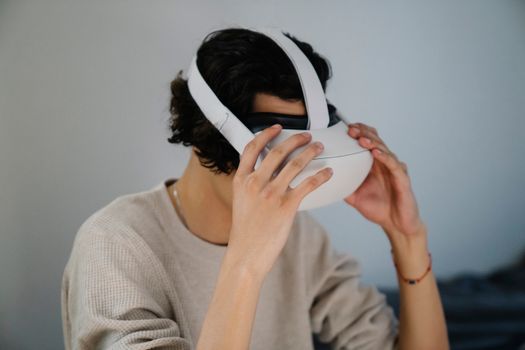
When Apple announced the Vision Pro 2 at WWDC last month (June 8, 2026), I rolled my eyes pretty hard. The original Vision Pro, which launched in early 2024, was a technological marvel that nobody actually wanted to wear for more than 20 minutes. It cost $3,499, weighed about as much as a bag of flour, and made you look like a cyborg who lost a bet.
But here we are in July 2026, and the Vision Pro 2 is real. It's $2,999 (still expensive, but a $500 drop), it's 30% lighter (now 500 grams), and Apple fixed some of the biggest complaints. I've been wearing one for the past week—at home, at a coffee shop, even on a short flight. And I have some thoughts that go beyond the usual tech reviewer script.
The Good: It's Actually Wearable Now
The original Vision Pro gave me a headache after 15 minutes. The front-heavy design pressed into my cheeks and made my nose feel like it was being slowly crushed. The Vision Pro 2 is better. Apple moved the battery to the back of the headband (it's still external, but now it clips onto the strap), which balances the weight. I wore it for two hours straight while watching Dune 2, and my face didn't go numb. That's a win.
The new 'Light Seal 2.0' is softer and comes in more sizes. I have a narrow face, and I finally got a fit that doesn't let light leak in from the sides. The fan is quieter too—I can barely hear it unless the room is dead silent.
The displays are still stunning. Two micro-OLED panels, 4K per eye, 120Hz refresh rate. Watching a nature documentary feels like you're standing in a forest. The passthrough camera is improved—less grain, less latency. You can actually read your phone screen through the headset now, which was impossible on the original.
The Bad: It's Still a Solitary Experience
Here's what nobody's talking about: the Vision Pro 2 is amazing when you're alone, but it's isolating when you're with other people. I tried to use it while my wife was watching TV in the same room. I put on the headset, and suddenly she was just a floating avatar in my space. I could see her, but there was a barrier. She said it felt like I was in another world—which, technically, I was.
Apple added 'Shared Spaces' in visionOS 3.0, which lets multiple Vision Pro users interact in the same virtual environment. But who has two Vision Pros in the same house? The feature is useless for 99% of buyers. And if you try to show someone what you're seeing via the external display (now brighter and higher resolution), they just see a slightly distorted version of your view. It's not the same.
I think this is a fundamental problem with VR/AR headsets: they're inherently isolating. The Vision Pro 2 is better than any other headset I've tried (and I've tried the Meta Quest 3 and the Valve Deckard), but it still separates you from the people around you. Unless you live alone, this is going to be a friction point.
The Surprising: It's Actually Good for Work
I didn't expect to like using the Vision Pro 2 for productivity, but here we are. visionOS 3.0 lets you place up to six virtual monitors around you, and they're crisp enough to read small text. I wrote a 2,000-word article using just the headset and the virtual keyboard (which floats in front of you). It was surprisingly comfortable, though my arms got tired after an hour of reaching for virtual keys.
The new 'Mac Virtual Display 2.0' is seamless—just look at your MacBook, and the screen expands into a massive virtual workspace. I could have my email, Slack, and a browser all floating around me while I worked. It made me feel like Tony Stark, minus the suit and the personality.