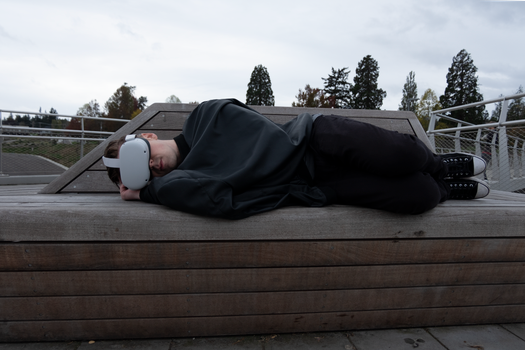
Look, I get it. The Apple Vision Pro is the most hyped piece of tech since the iPhone. When it launched earlier this year, everyone lost their minds over the design, the screens, the eye-tracking. Meanwhile, the Meta Quest 3 quietly released for a fraction of the price and has been steadily improving. But which one should you actually buy?
I decided to settle this once and for all. For the past week, I've been using both headsets daily. I worked in them, watched movies in them, played games in them, and even tried to exercise in them (spoiler: it was weird). Here's my honest breakdown, with zero corporate spin.
The Price Problem Nobody Wants to Admit
Let's start with the elephant in the room. The Apple Vision Pro costs $3,499. The Meta Quest 3 costs $499. That's a $3,000 difference. For that money, you could buy a top-tier MacBook Pro, an iPad, and still have cash left over for dinner.
Apple will tell you that the Vision Pro is a 'spatial computer,' not just a VR headset. And they're right—it does things the Quest can't. But is it $3,000 worth of things? I spent the first day just setting up the Vision Pro, and I'll be honest, the initial thrill faded fast.
The Quest 3, on the other hand, was out of the box and working in under 10 minutes. No calibration, no fuss. Just put it on and go. For $500, that's the experience you should expect. For $3,500, I expected magic. What I got was... really impressive tech that's still figuring out what it wants to be.
Display Quality: Apple Wins, But At What Cost?
There's no contest here. The Vision Pro's micro-OLED displays are stunning. Watching a movie in the Vision Pro is genuinely cinematic—the blacks are deep, the colors pop, and the passthrough is so good you almost forget you're wearing a headset. I watched 'Dune: Part Two' on it and felt like I was in a private IMAX theater.
The Quest 3's displays are good—better than the Quest 2 by a lot—but they're not on the same level. There's a slight graininess in the passthrough, and the field of view is narrower. You notice the difference immediately.
But here's the thing: the Vision Pro gives you a headache after about 45 minutes. The weight is the problem. It's 650 grams, which is heavy for a headset. After a week, I still couldn't wear it for more than an hour without my neck hurting. The Quest 3 is lighter (515 grams) and better balanced. I wore it for three hours straight playing 'Asgard's Wrath 2' and only stopped because my eyes got tired.
What good is a beautiful display if you can't use it for more than a movie?
The App Ecosystem: Quantity vs. Quality
This is where the battle gets interesting. Apple launched the Vision Pro with a handful of native apps—mostly Apple's own stuff and a few big names like Disney+. It works wonderfully for those apps. But try to do anything else and you hit walls.
I wanted to use Slack in the Vision Pro. It works as an iPad app, but it's not optimized. The windows float in space, but the touch interface is fiddly. I tried using it for work for a full day and gave up after two hours. It's just not there yet.