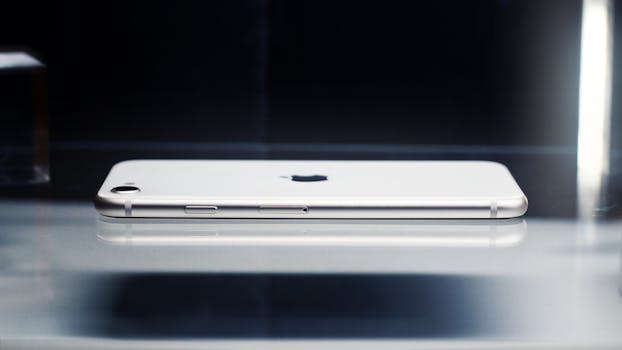
Let me be honest with you: I've been an iPhone guy for the last six years. Not because I think Apple is perfect, but because the ecosystem just works. When my iPhone 14 finally gave up the ghost last month (RIP, battery at 68%), I knew I wanted a budget phone. The rumors were flying about both the Pixel 9a and the iPhone SE 4. Both launched in the last two weeks of May 2026. Both promised flagship features at mid-range prices. I bought both, used them for a week each, and here's the raw truth.
First, the iPhone SE 4. Apple finally killed the home button. Yes, you read that right. The SE 4 has a full edge-to-edge OLED display, Face ID, and a single 48MP camera. It starts at $499. On paper, it's a dream. But in real life? The display is only 60Hz, the battery barely lasts a day with heavy use, and the design is basically an iPhone 14 body with a single camera. It feels like Apple played it safe. Too safe.
The Pixel 9a: Google's Dark Horse
Then there's the Google Pixel 9a. At $449, it's $50 cheaper. It has a 120Hz OLED display, a 50MP main camera with the same sensor as the Pixel 9 Pro, and a 48MP ultrawide. The Tensor G5 chip isn't as fast as the A19 Bionic in raw benchmarks, but in day-to-day use, you won't notice. The cameras are where the Pixel 9a absolutely destroys the iPhone SE 4. I took photos of my dog at the park, a sunset over the city, and a dimly lit dinner. The Pixel 9a's Night Sight is miles ahead. The iPhone SE 4's photos look washed out and noisy in low light. I'm not exaggerating — I showed the photos to my wife, who knows nothing about tech, and she said, 'Why does the iPhone look worse?'
But it's not all sunshine for Google. The Pixel 9a has a plastic back that feels cheap compared to the iPhone's glass. The speakers are tinny. And the fingerprint sensor under the display is slow. I missed the iPhone's Face ID every single time.