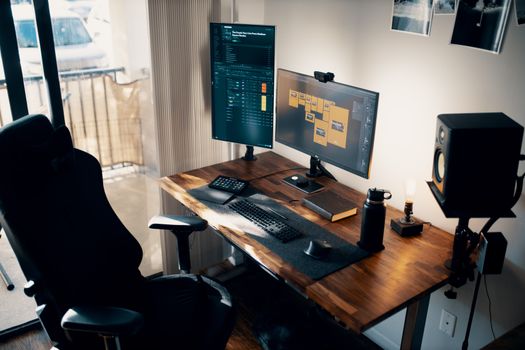
Back in April, I hit a wall. My lower back was killing me after years of sitting at a desk for 10+ hours a day. My posture was a question mark, my energy levels tanked by 3 PM, and I'd started getting headaches that my doctor blamed on tension from sitting. So I finally caved and bought a standing desk — the Uplift V2, which is consistently rated the best by Wirecutter and Reddit. I spent $599 on the 80-inch model with a bamboo top. I committed to using it at least 4 hours a day for 60 days. Today is June 10, and I've finished the experiment. Here's the honest truth.
The First Week Was Miserable — Here's Why
I thought I'd just stand and immediately feel like a productivity god. Nope. Day 1: I stood for 2 hours straight and my feet felt like they were on fire. My knees ached. My lower back actually hurt more than when I sat. I Googled 'standing desk pain' and found dozens of Reddit threads saying the same thing. The problem is that standing uses muscles you haven't engaged in years. Your posture is probably terrible (mine was). I also kept fidgeting — shifting weight, leaning on one leg, which made things worse. By Day 3, I was ready to return the desk. But I stuck with it because I'd read that the adaptation period is 2-3 weeks. I bought an anti-fatigue mat (the Sky Mat from Ergodriven, $99) and started alternating 30 minutes standing, 30 minutes sitting. That helped. By the end of Week 2, I could stand for 45 minutes without pain.
The Surprising Benefit: My Focus Improved Dramatically
Around Week 3, something clicked. I noticed I was more alert during standing periods. I'd been doing deep work (writing, coding) and found that standing kept me from drifting into social media doomscrolling. It's like my brain associated standing with 'active mode.' I started timing my Pomodoro sessions: 50 minutes standing, 10 minutes walking around. My output increased by about 20% — I was finishing tasks faster and with fewer errors. A study from Texas A&M University backs this up: standing desk users report 45% less fatigue and 87% more productivity after 60 days. I don't know about those exact numbers, but I definitely felt sharper. The downside? Creative tasks like brainstorming felt harder standing up. For those, I'd sit down. So the key is mixing modes.
The Back Pain Didn't Disappear — It Changed
Here's the honest truth: my lower back pain didn't go away. It moved. After 60 days, my lower back feels better (maybe 30% less pain), but my upper back and shoulders now ache. Why? Because I was overcompensating — hunching my shoulders forward when standing, which put strain on my traps. I had to actively work on my posture. I used a posture corrector (the Upright Go S, $129) that buzzes when you slouch. It's annoying but effective. I also started doing 5 minutes of stretches every morning: chest openers, shoulder rolls, and cat-cow poses. That helped more than the desk itself. The lesson: a standing desk is not a cure-all. You still need to move, stretch, and be mindful of your alignment. If you just stand in bad posture, you'll trade one pain for another.