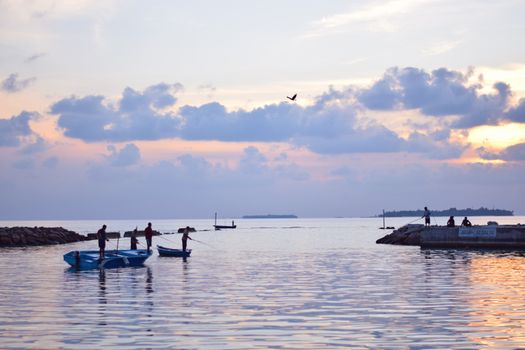
I've always wanted to go to the Maldives. Who hasn't? Those overwater bungalows, the crystal-clear water, the feeling of being on a deserted island in the middle of the Indian Ocean. But every time I looked at prices, I closed the tab. $1,000 a night for a resort? $500 for a seaplane transfer? That's more than my rent. I convinced myself it was a destination for honeymooners and billionaires, not for a guy who writes articles for a living.
Then, in late May, I saw a flight deal: New York to Malé, round trip, $580 on Turkish Airlines. I booked it without thinking. I had a week to plan. I started researching and discovered something surprising: the Maldives doesn't have to be expensive. You just have to avoid the resorts. I spent seven days there in June 2026 — rainy season, technically, but I only saw two days of rain — and I spent less than $1,500 total, including flights. Here's exactly how I did it, and what you need to know if you want to do the same.
Forget the Resorts — Stay on a Local Island
The biggest tip I can give you is this: don't stay on a resort island. The Maldives is made up of over 1,000 islands, and about 200 of them are inhabited by locals. The resorts occupy their own private islands, which are expensive because you're paying for exclusivity. Local islands have guesthouses, and they're a fraction of the price. I stayed on Ukulhas, a small island in the Alif Alif Atoll. My guesthouse, Island Pearl, cost $45 per night. That included breakfast. The room was simple but clean — air conditioning, hot water, a comfortable bed. The beach was a two-minute walk away. The water was the same turquoise blue as the resorts. The difference? There were locals around. Children playing. A mosque calling to prayer five times a day. It felt real, not like a manufactured paradise.
I met a couple from Germany who had spent their first three nights at a resort on Veligandu Island. They paid $1,200 per night. They moved to Ukulhas for the second half of their trip and paid $60 per night at a different guesthouse. They told me the resort was nice, but the guesthouse was more fun. "At the resort, everyone is a tourist. Here, we eat with the family. We played football with the kids. It's better." I believe them.
Getting Around — Public Ferries Are the Secret
Transportation between islands is where the Maldives tries to drain your wallet. Resorts force you to take speedboats or seaplanes, which cost $200-$500 per person each way. Local islands have public ferries. They're slow — a speedboat takes 30 minutes, a ferry takes 2 hours — but they cost $3. Yes, three dollars. I took a ferry from Malé to Ukulhas, which took about three hours. The boat was basic: plastic seats, no air conditioning, but it was clean and the windows opened to let in the sea breeze. I sat next to a local woman who was visiting her sister on a nearby island. She offered me some dried tuna. I accepted. It was delicious.
The ferry schedule is limited — usually one or two departures per day — so you have to plan ahead. I used the website FerryMaldives.com to check timetables. It's not fancy, but it works. I also took a speedboat once, from Ukulhas to Rasdhoo, because I missed the ferry. That cost $25. Still cheap by Maldivian standards. My total transportation costs for the week: $42.
One thing nobody talks about: the Malé ferry terminal is chaotic. It's a concrete dock with no signage. People just stand around and wait. When the ferry arrives, everyone pushes forward. I almost missed my boat because I was looking at my phone. Pay attention. Ask a local. Someone will help you.
Food — Eat Where Locals Eat
Tourist restaurants on local islands charge $15-$20 for a plate of curry. Walk two streets inland, and you'll find the same dish for $3. I found a small restaurant on Ukulhas called The Sea Breeze — not a fancy name, but the food was incredible. They served mas huni, a traditional Maldivian breakfast of shredded smoked tuna, coconut, and onion, mixed with flatbread. It cost $2.50. I ate it every morning. For dinner, I had grilled reef fish with rice and salad for $5. The fish was caught that morning. The owner, Ahmed, told me he goes fishing every day at sunrise. "The tourists pay too much for frozen fish," he said. "Here, it's fresh."
I also discovered the local shops — small convenience stores that sell instant noodles, canned tuna, and cookies. I bought a bag of apples, a box of crackers, and some peanut butter for about $8. That covered my lunches for the week. I'm not saying you should survive on peanut butter crackers, but if you want to save money, it helps. And honestly, I enjoyed the simplicity. No decisions to make. Just eat, swim, repeat.