✈️ Travel

I Spent a Week in the Azores — and I'm Already Planning My Return

I Spent a Week in the Azores — and I'm Already Planning My Return

I'll be honest: I booked the Azores on a whim. A friend sent me a cheap flight alert — $350 round trip from Boston to Ponta Delgada — and I clicked buy without really knowing what I was getting into. I knew it was Portuguese islands in the middle of the Atlantic. I knew there were volcanoes and green hills. I did not know I'd come back convinced it's one of the most underrated travel destinations on Earth.

If you're tired of overcrowded European hotspots and want somewhere that still feels wild and undiscovered, the Azores might be your next favorite place. Here's my honest experience.

Getting There: It's Easier Than You Think

Direct flights from Boston to Ponta Delgada (the capital of São Miguel island) take about 5 hours. There are also flights from New York, Toronto, and several European hubs. SATA Azores Airlines is the main carrier; it's not fancy, but it's reliable. I'd recommend flying on a Tuesday or Wednesday for the best deals.

The time zone is the same as Portugal mainland (UTC-1), which means minimal jet lag from the East Coast. You land at 7 AM local time, drop your bags, and you have a full day ahead.

Where to Stay: Ponta Delgada vs. The Countryside

I split my week between two spots: three nights in Ponta Delgada and three nights in a rural guesthouse near Furnas. If I had to do it again, I'd spend only one night in the city.

Ponta Delgada is charming — cobblestone streets, pastel buildings, a marina full of yachts. But it's still a city. The real magic of the Azores is outside town. The rural guesthouse I booked (Quinta do Mar, about $120/night) had a view of a volcanic crater lake, a private hot spring, and absolute silence at night. The owner left fresh bread and local cheese outside my door every morning.

Skip the chain hotels. Find a small guesthouse on the north coast or near Furnas.

The Must-Do Activity: Sete Cidades Crater Lake

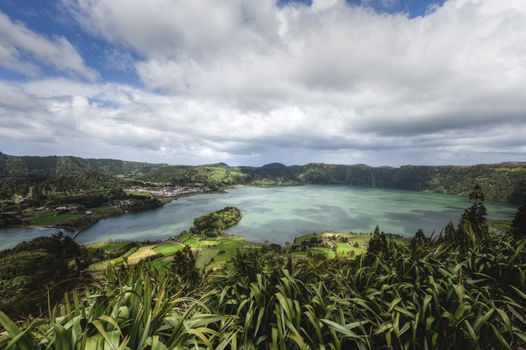
This is the postcard image of the Azores: twin lakes inside a massive volcanic caldera, one blue and one green, connected by a bridge. You can hike down to the lakes or drive up to the viewpoint at Vista do Rei. I did both.

The hike from the village of Sete Cidades to the lakes takes about 2 hours round trip. It's moderate — some uphill, but nothing crazy. The trail winds through forests of hydrangea (which bloom purple in summer) and ends at the edge of the blue lake. I went in early June, and there were maybe 15 other people on the trail. Compare that to, say, Cinque Terre, where you're shoulder-to-shoulder in July.

Pro tip: go early. By 10 AM, the tour buses start arriving. By 11 AM, the viewpoint is crowded. I started my hike at 7:30 AM and had the place to myself for an hour.

The Thing Nobody Tells You: The Food

Azorean cuisine is completely different from mainland Portugal. Because the islands are isolated, they rely heavily on what's local: seafood, dairy, and volcanic cooking techniques.

The most famous dish is Cozido das Furnas — a stew of meats and vegetables cooked underground using geothermal heat. I had it at a restaurant in Furnas (Restaurante Tony's, highly recommended). The meat was fall-apart tender, the broth rich and smoky. It's not fancy, but it's unforgettable.

Also try: fresh cheese (queijo fresco), which is soft and slightly tangy, served with local honey. And the pineapple. Yes, pineapple grows here. It's smaller and sweeter than Hawaiian pineapple, grown in greenhouses heated by volcanic steam. I bought one at a roadside stand for €2. Best pineapple I've ever eaten.

What to Skip

Not everything is perfect. The whale watching tours are popular, but they're expensive (€60-80) and the boats can be crowded. I did one and saw a few fins, but it wasn't worth the price. Instead, I recommend hiking the coastal trails around Ponta da Ferraria — you can spot dolphins from the cliffs for free.

The thermal pools in Ponta Delgada are also overrated. There's a public pool complex that costs €8, but it's basically a regular swimming pool with hot water. The real thermal experience is in Furnas, where you can soak in natural hot springs surrounded by ferns and steam vents. That's free if you know where to go (ask a local — they'll point you to a spot called Caldeira Velha).

Packing and Practical Tips

The weather changes constantly. I experienced sun, rain, and fog within a single hour. Pack layers — a waterproof jacket, a fleece, and waterproof hiking shoes are non-negotiable. The sun is also stronger than you'd expect at this latitude (the ozone layer is thinner over the Atlantic), so bring sunscreen and a hat.

Rent a car. Public transport exists but it's infrequent and doesn't reach the best spots. I rented a small Fiat from a local agency for €30/day. The roads are narrow and winding, but drivers are polite. Just watch for cows — they roam freely on some rural roads.

The Verdict

The Azores isn't a luxury destination. It's not Instagram-perfect in a curated way. It's raw and green and quiet, with food that tastes like the earth and views that make you forget your phone exists. I came back feeling genuinely refreshed, not exhausted from a vacation.

I'm already checking flights for next spring. If you go, let me know what you think. And don't skip the pineapple.

TR
Sarah Mitchell

We spend hours researching and testing before we write anything. If something changes, we update the article. About our process →