I booked a flight to Lisbon in early July specifically to visit the new 'Museu da Resistência' — a restored political prison from the Salazar dictatorship era that opened to the public in May 2026. The reviews were polarizing. Some called it 'essential historical education.' Others called it 'trauma tourism.' I wanted to see for myself.
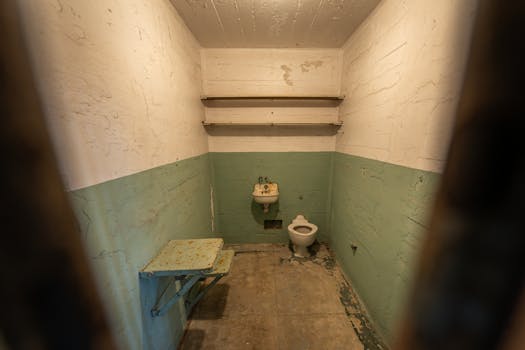
The museum is located in an old police station in the Aljube neighborhood, about a 15-minute walk from the tourist crowds of the Água district. The building was used between 1928 and 1974 to hold political prisoners — journalists, union organizers, students, anyone who opposed the regime. The cells are tiny, maybe 6 feet by 8 feet, with concrete walls and a single iron cot. The walls are covered in graffiti left by prisoners. Some of it is heartbreaking. 'I will not forget,' reads one message in Portuguese. 'They took my voice but not my soul.'
The Controversy
Not everyone is happy about this museum. I talked to a Lisbon historian named Dr. Ana Moreira who told me that the site was controversial even during the planning stages. 'Some survivors of the regime wanted these spaces to remain closed,' she said. 'They believe that turning a torture site into a tourist attraction trivializes the suffering.' Others, she explained, argued that the museum could serve as a warning — a physical reminder of what authoritarianism looks like.
The museum's director, whom I spoke to after my tour, acknowledged the tension. 'We walk a fine line every day,' he told me. 'We're not here to entertain. We're here to educate. If someone comes here for a selfie, I hope they leave with more than a photo.'
I saw plenty of people taking photos. Some were respectful — quiet, contemplative shots of the cells. Others were not. I watched a tourist pose with a thumbs-up in front of a cell door. Another group laughed loudly in the 'interrogation room' — a space where a replica of the original equipment sits behind glass. I felt my stomach turn.
The Experience Itself
The museum is divided into three sections. The first covers the history of the Estado Novo regime — the political context, the censorship, the secret police. The second section is the prison itself, with the cells, the solitary confinement block, and the 'recreation yard' where prisoners were allowed one hour of sunlight per day. The third section focuses on the Carnation Revolution of 1974, which ended the dictatorship.
The most powerful moment for me was the 'listening room' — a small, dark space where you can hear audio recordings of former prisoners describing their interrogations. The voices are played through headphones. One man, now in his 80s, described being beaten with a rubber hose for three days. 'They wanted me to name names,' he said. 'I gave them fake names. They beat me harder.' The recording ends abruptly. I sat in silence for a few minutes afterward.
Is this 'dark tourism'? Yes, technically. But I think that label oversimplifies something more complex. There's a difference between voyeurism and remembrance. The question is: which are you doing when you visit?