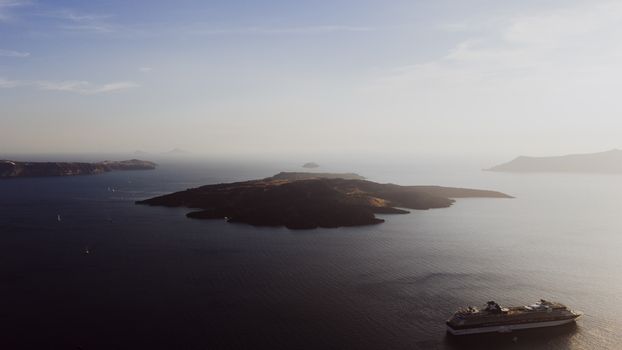
If you’ve ever seen a photo of Santorini on Instagram, you probably imagine whitewashed buildings, blue-domed churches, and a sunset that looks like it was painted by a god. What you don’t see is the gridlock of tourists—hundreds of people crammed onto the same narrow path in Oia, all trying to get that exact same photo. That’s been the reality for years, and it’s only gotten worse. But in early June 2026, the Greek government finally did something about it. On June 1, they implemented new limits: no more than 8,000 cruise passengers can disembark in Santorini per day, and only three ships can dock at a time. I booked a flight on June 9 to see if the change actually works. Today is June 12, and I’m sitting in a quiet café in Fira, watching the caldera without a sea of selfie sticks in my way. Here’s what I found.
The Numbers Don’t Lie—But They Don’t Tell the Whole Story
Before the cap, Santorini was seeing up to 18,000 cruise passengers on peak days in summer 2025. That’s more than double the island’s permanent population of about 15,000. The result was chaos: hour-long waits for the cable car from the old port, donkey trails clogged with people, and locals complaining that they couldn’t even buy bread at the supermarket without standing in a line of tourists. The new cap cuts that to 8,000, which sounds like an improvement until you realize that the island still gets thousands of independent travelers—people like me, flying in from Athens or taking the high-speed ferry. On Wednesday, the day after I arrived, there were 7,200 cruise passengers and about 4,000 independent visitors. That’s still 11,200 people on a small island. It was busy, but it wasn’t suffocating.
I walked from Fira to Oia along the coastal path—about 10 kilometers—and saw fewer people than I expected. Last summer, a friend who visited in July said she had to stop every two minutes to let a group pass. I stopped maybe five times the entire hike. The difference is real, but it’s subtle. The busiest spots, like the three blue domes in Oia, still have crowds. You’re not going to get a photo without a few strangers in the background. But the overall vibe has shifted from “panic-inducing” to “annoying but manageable.”
What the Locals Think
I talked to Maria, who runs a small bakery in Fira called “To Spitiko.” She’s been here for 22 years. “The cap helps,” she told me, wiping flour off her hands. “But the season is so short—maybe four months—that I need the tourists to survive. I can’t make rent in the winter. So I don’t know if less is better for my business.” That’s the tension at the heart of the new rules: locals want to preserve their island’s charm and their own quality of life, but they also rely on tourism for income. The cap might reduce day-trippers, but it could also push them toward longer stays, which means more money per visitor. So far, the data shows that cruise passenger spending in Santorini was down about 15% in the first week of June compared to the same period in 2025, but hotel occupancy for independent travelers is up 8%. It’s a trade-off, and it’s too early to say if it’s a win.