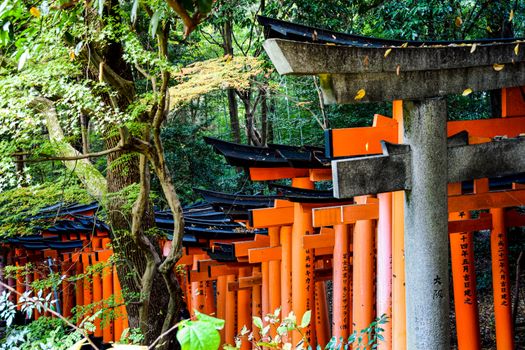
I love Japan. I’ve been five times. But after my fourth trip to Tokyo, I started feeling like I was seeing the same things — Shibuya Crossing, Fushimi Inari, the usual spots. So for my 2026 trip, I decided to go places most tourists skip. I spent two weeks in three prefectures that barely appear in guidebooks: Shimane, Tottori, and Fukui. What I found was a Japan that felt more real, more quiet, and honestly more magical than anything I’d seen before.
Shimane: The Land of Myths
Shimane is home to Izumo Taisha, one of Japan’s oldest and most important Shinto shrines. It’s dedicated to the god of marriage and relationships, and the main hall is massive — built with giant ropes and wooden beams that feel ancient. I arrived on a rainy Tuesday and had the place almost to myself. No crowds, no selfie sticks, just the sound of rain on cedar trees. There’s a museum on site that has a sword from the 6th century that’s so well preserved it looks fake. I spent three hours just wandering the grounds.
But the real highlight was the Adachi Museum of Art, which has a garden that’s consistently ranked best in Japan. I’m not usually a garden person, but this one stopped me in my tracks. It’s designed to be viewed from inside the museum, like a living painting. Every angle is perfect. I sat on a bench for 40 minutes just watching the leaves move. The museum also has a collection of modern Japanese paintings that are stunning. It’s a detour, but worth it.
Tottori: Sand Dunes and Silence
Yes, Japan has actual sand dunes. The Tottori Sand Dunes stretch for 16 kilometers along the coast, and they look like something out of the Sahara. I went at sunrise and watched the light turn the sand from gray to gold. There are camels you can ride, which feels ridiculous until you’re actually doing it. I also visited the Sand Museum, which has sculptures made entirely of sand — there was a giant replica of Angkor Wat that was incredible. Tottori City itself is small and sleepy, but the people are incredibly friendly. I had a bowl of nagaimo (grated yam) soba at a tiny shop run by an elderly couple who didn’t speak English but insisted on giving me free extra toppings. It’s those moments you remember.